Unusual Ballroom Features 2023
For photos of Ballroom photos from previous years, see:http://paleo.cc/paluxy/ballroom/Ballroom Menu.htm
All photos and text (C) 2023 Glen J. Kuban unless otherwise indicated
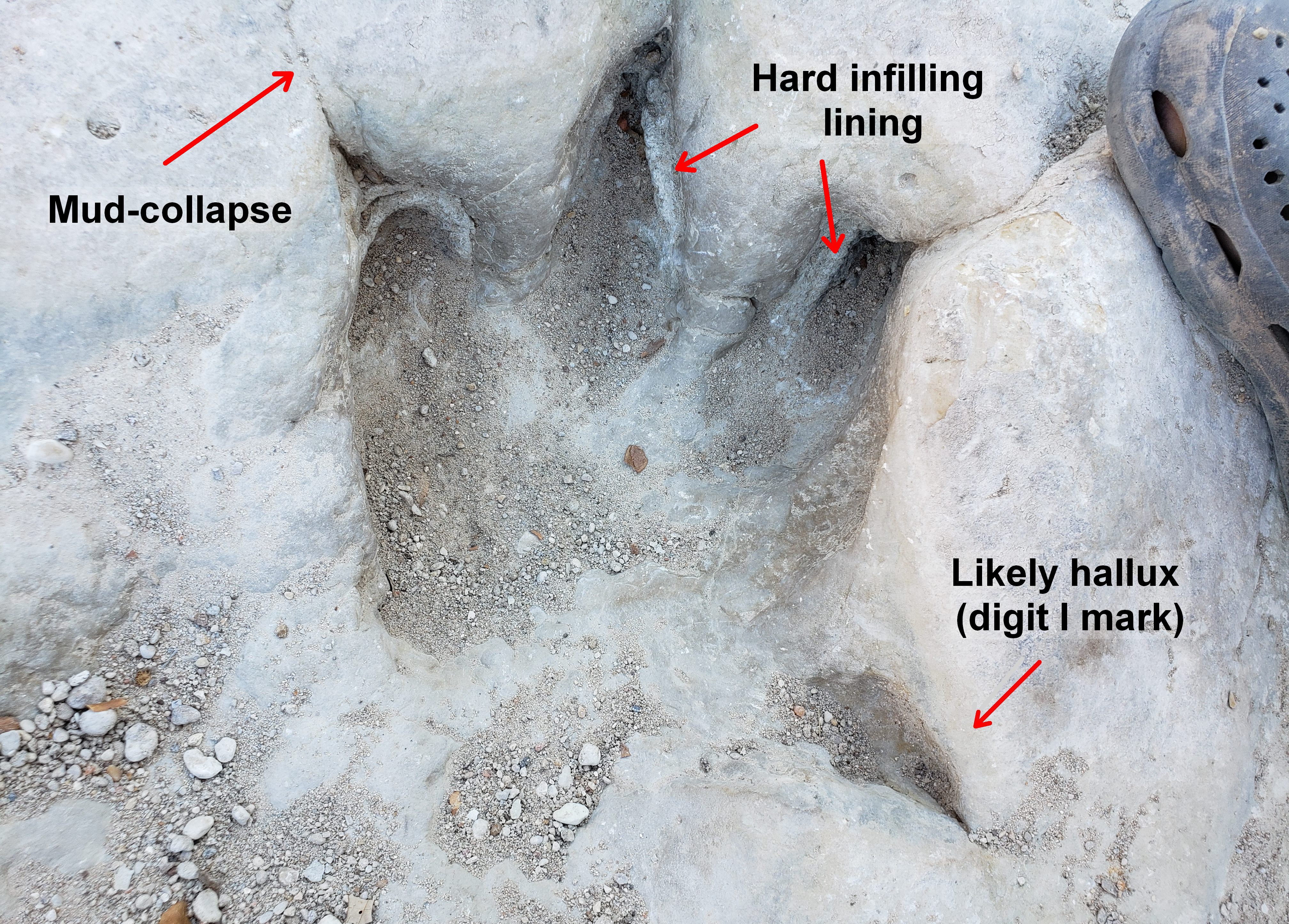
Besides the curious "squiggle" trail described in a separate page, the Ballroom site contains a number of other unusual features. These including hallux marks (of the small, rearward pointed first digit). This digit is held too high on the foot to record in most tracks, but can be seen in many of the deeper theropod tracks on the Ballroom. Often these deep tracks also show mud collapsed digits, and in some cases (as in the first photo below), one or more digits, and sometimes the entire track, is lined with a thin veneer of hard infilling material (unlike infillings on the Taylor Site, which usually fill all or most of the tracks).
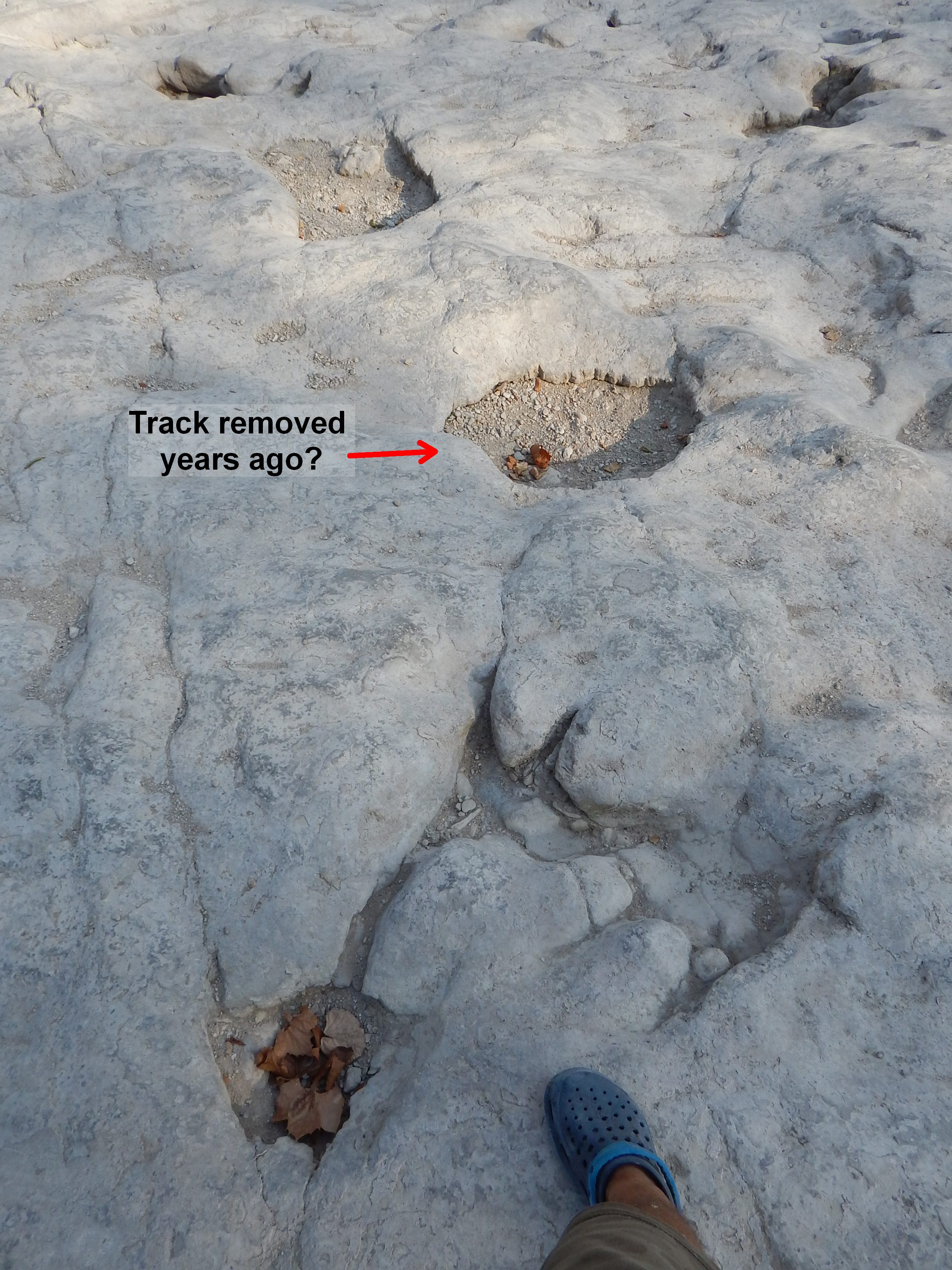
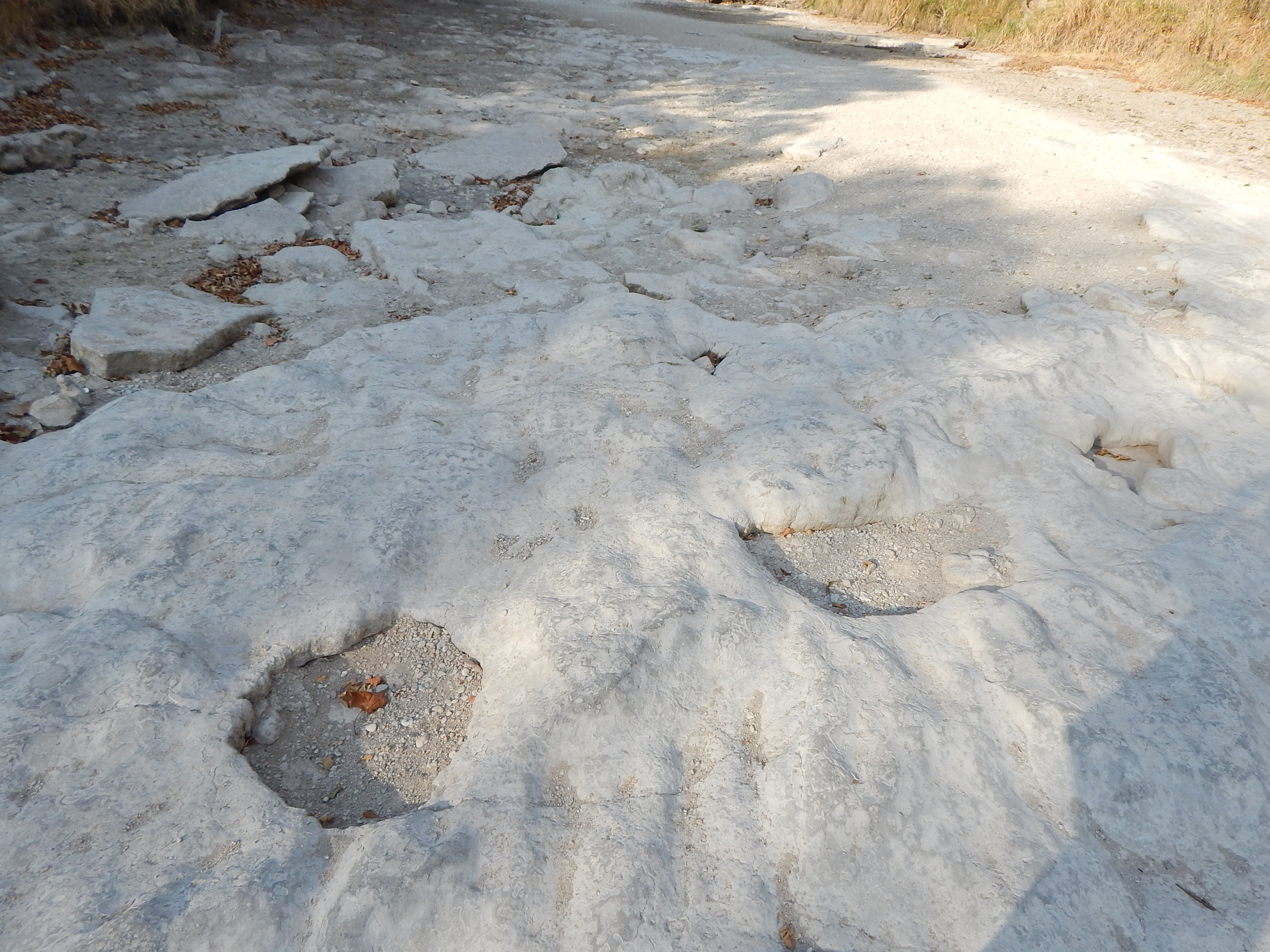
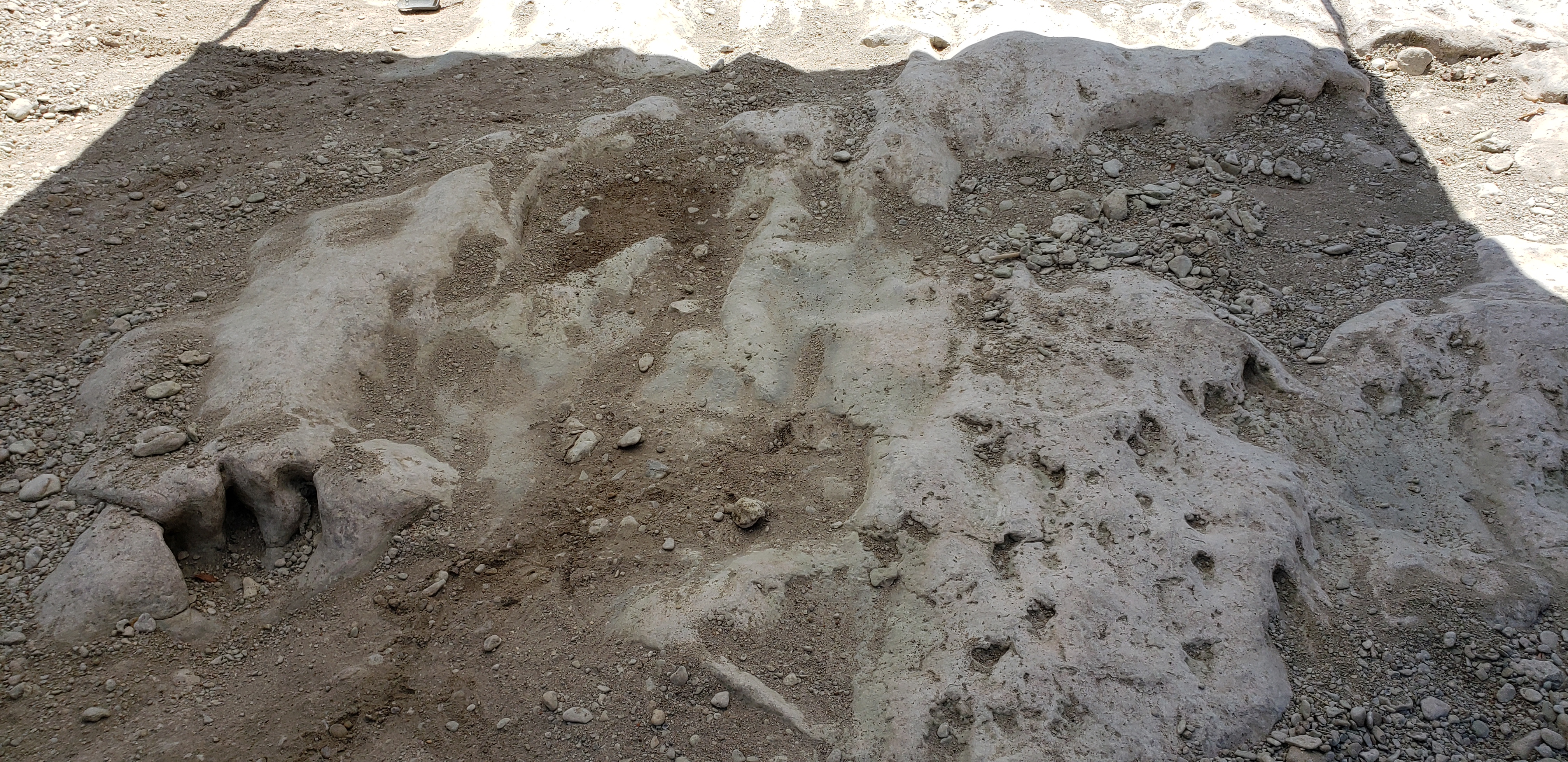
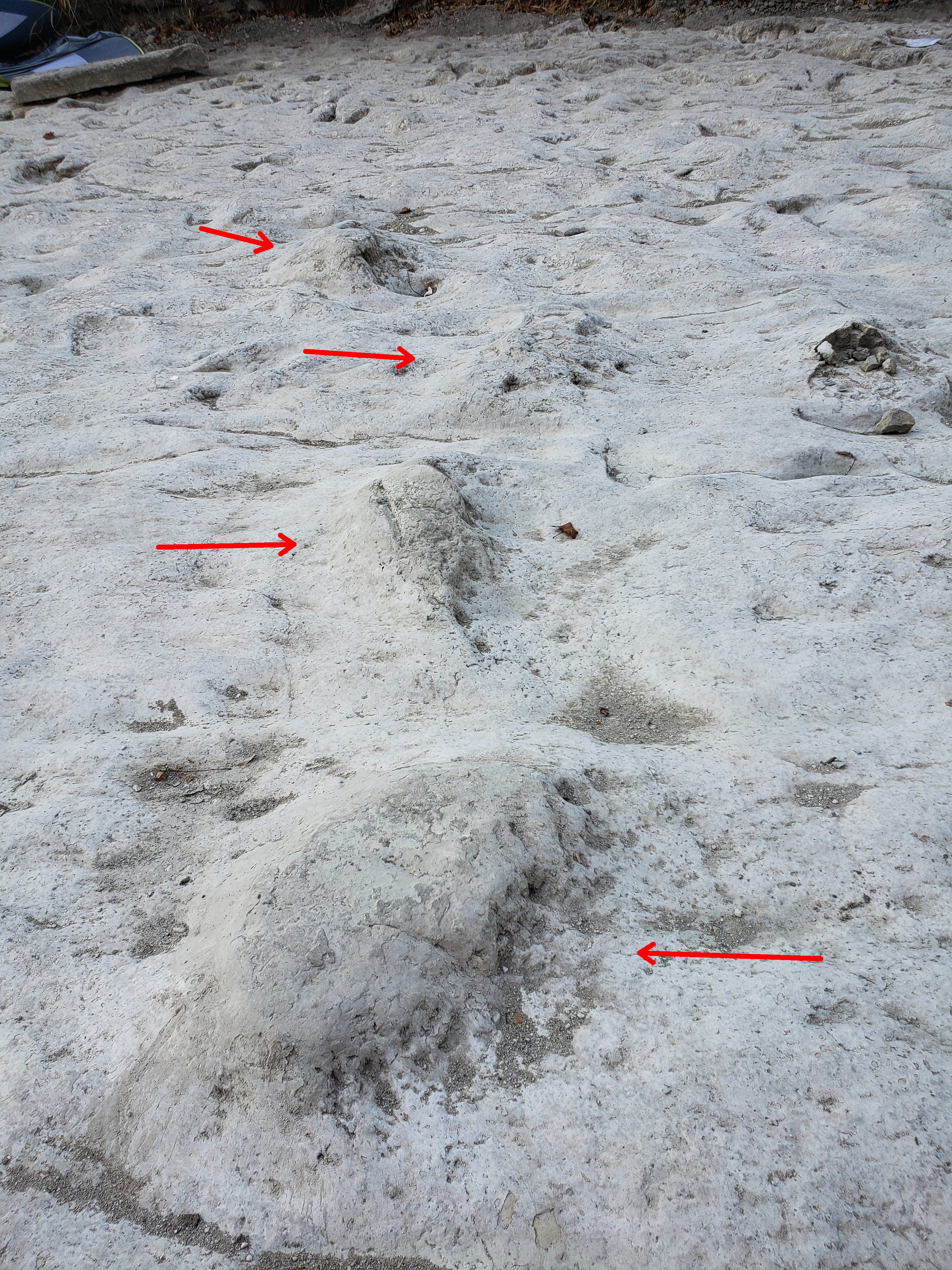
Other odd features at the Ballroom include several large holes that do not resemble tracks, but which might be places where tracks were chiseled out by locals decades ago. The site also contains many smaller holes, sometimes more or less in a row. These may be burrows of an unknown creature, or simply random inorganic features (perhaps examples of karst erosion) of the track bed. Where the site begins to slope downward on the sough side, a series of large mounds several inches high cross the site. They appear to almost (but not quite) be in a striding sequence, but do not have very consistent sizes or shapes, nor indications of digits, or infilling outlines. The latter is mentioned because at Taylor Site and surrounding areas, many infilled tracks occur, some of which have positive (raised) relief. This results when the iron-rich infilling material oxidizes (rusts), causing it to become harder than the surrounding limestone, so that the matrix erodes around the infilling material and causes the infilling to get higher and higher with time. Some infilled tracks are actually as high or higher than the mounds at the Ballroom, but again, the Ballroom mounds do not appear to relate to infilled tracks, and their origin is as yet unknown.