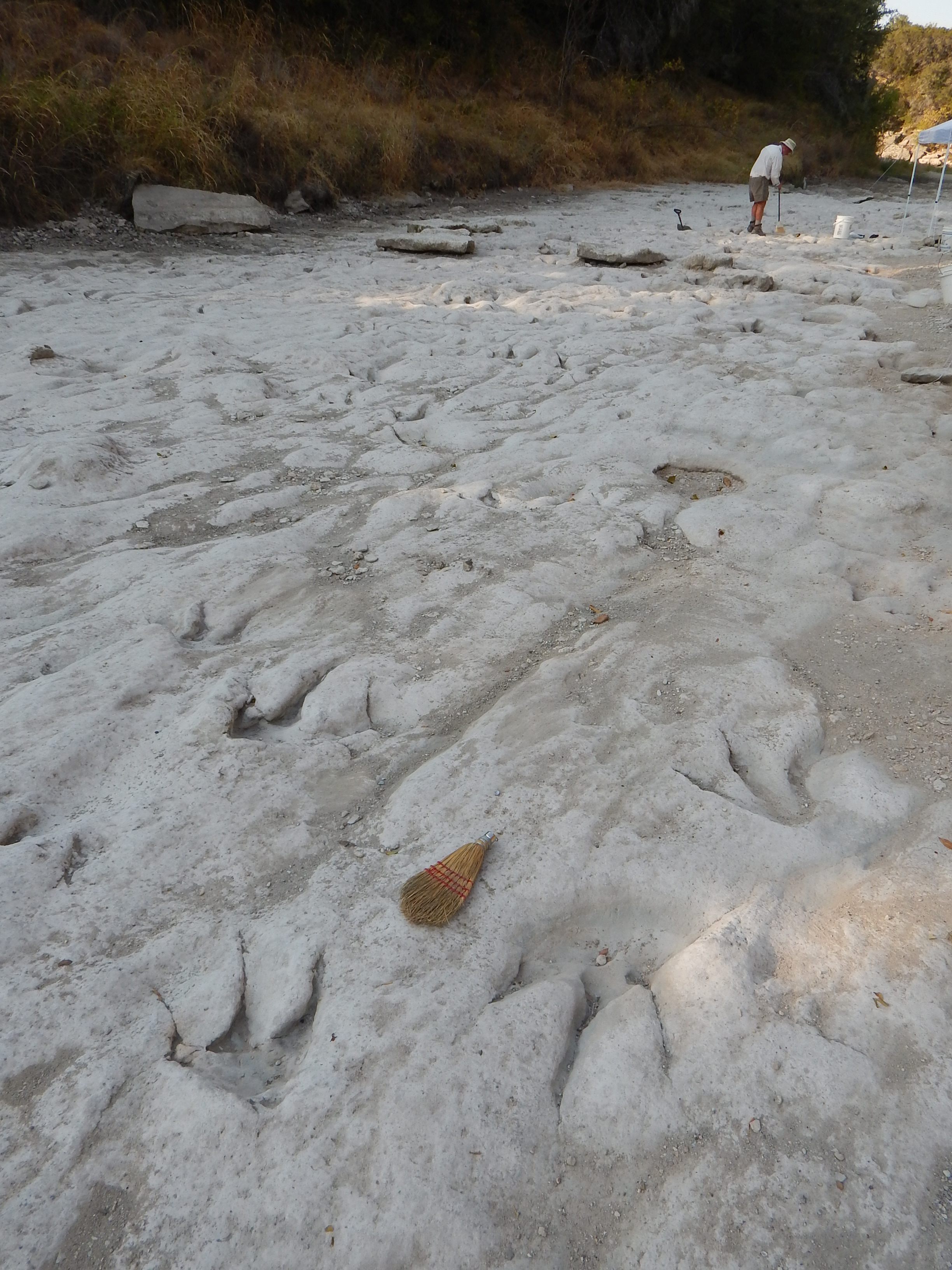
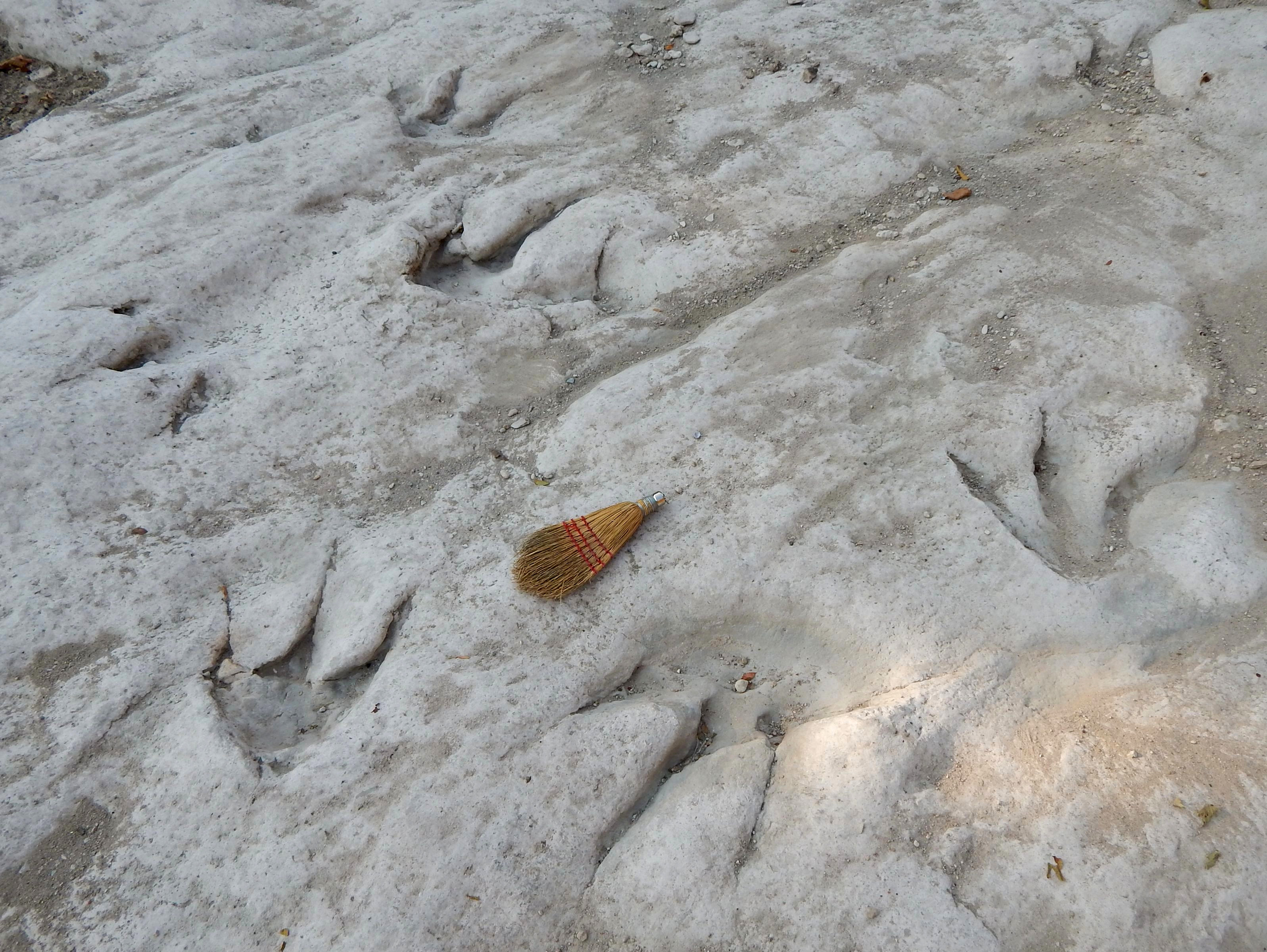
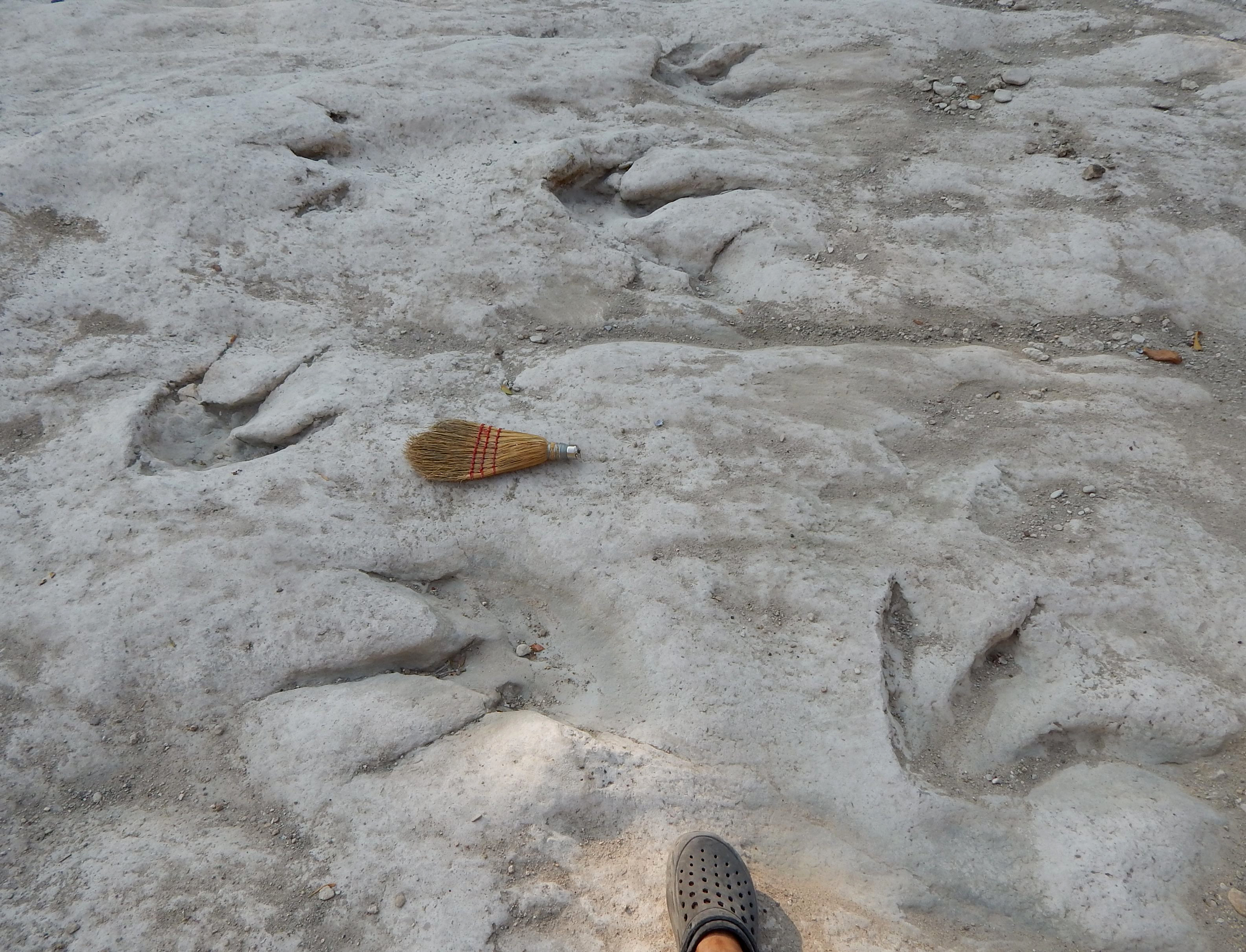
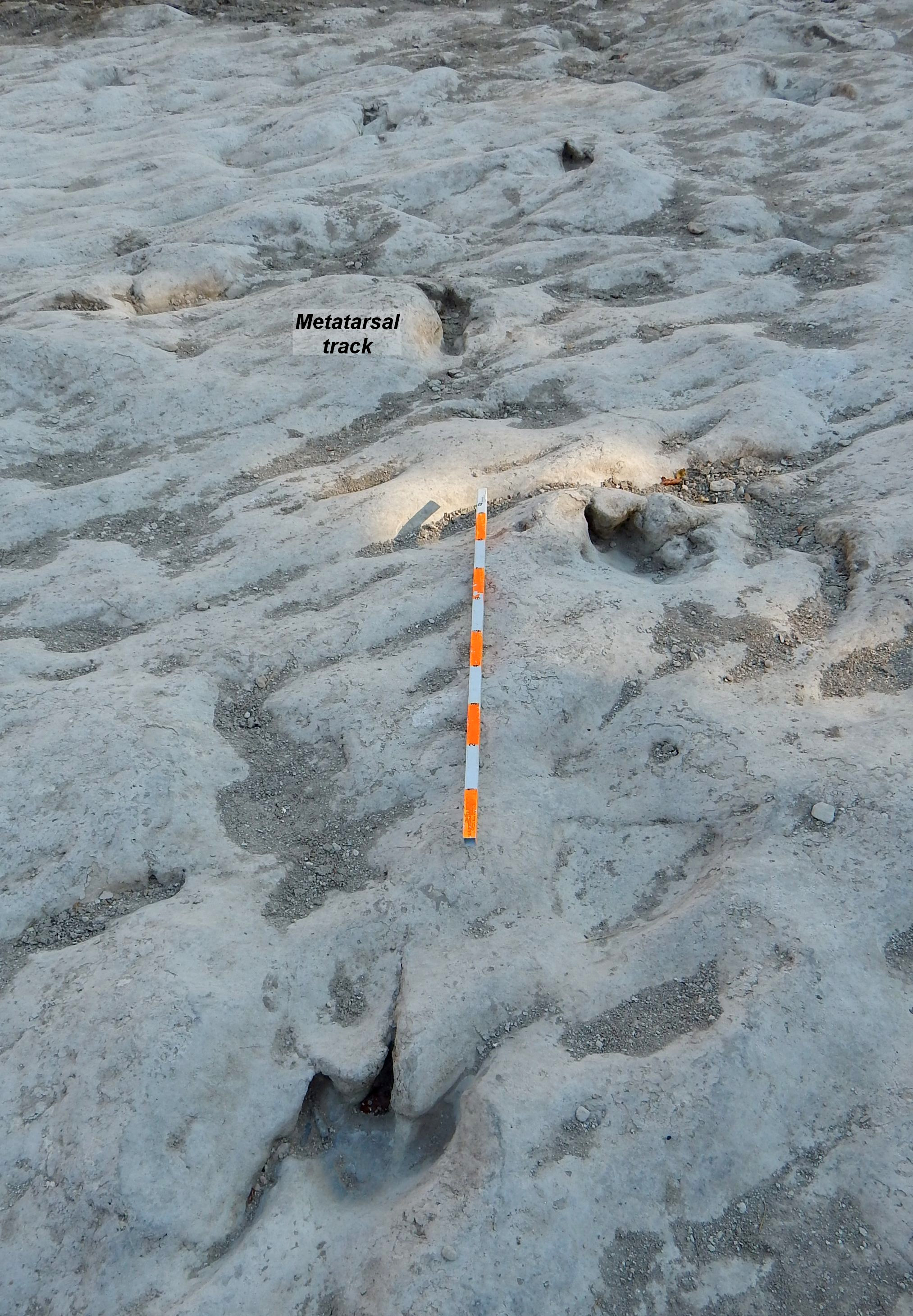
Ballroom Site Theropod Tracks, South Slope (previously mapped)
For photos of Ballroom photos from previous years, see:
http://paleo.cc/paluxy/ballroom/Ballroom Menu.htm
All photos and text (C) 2023 Glen J. Kuban
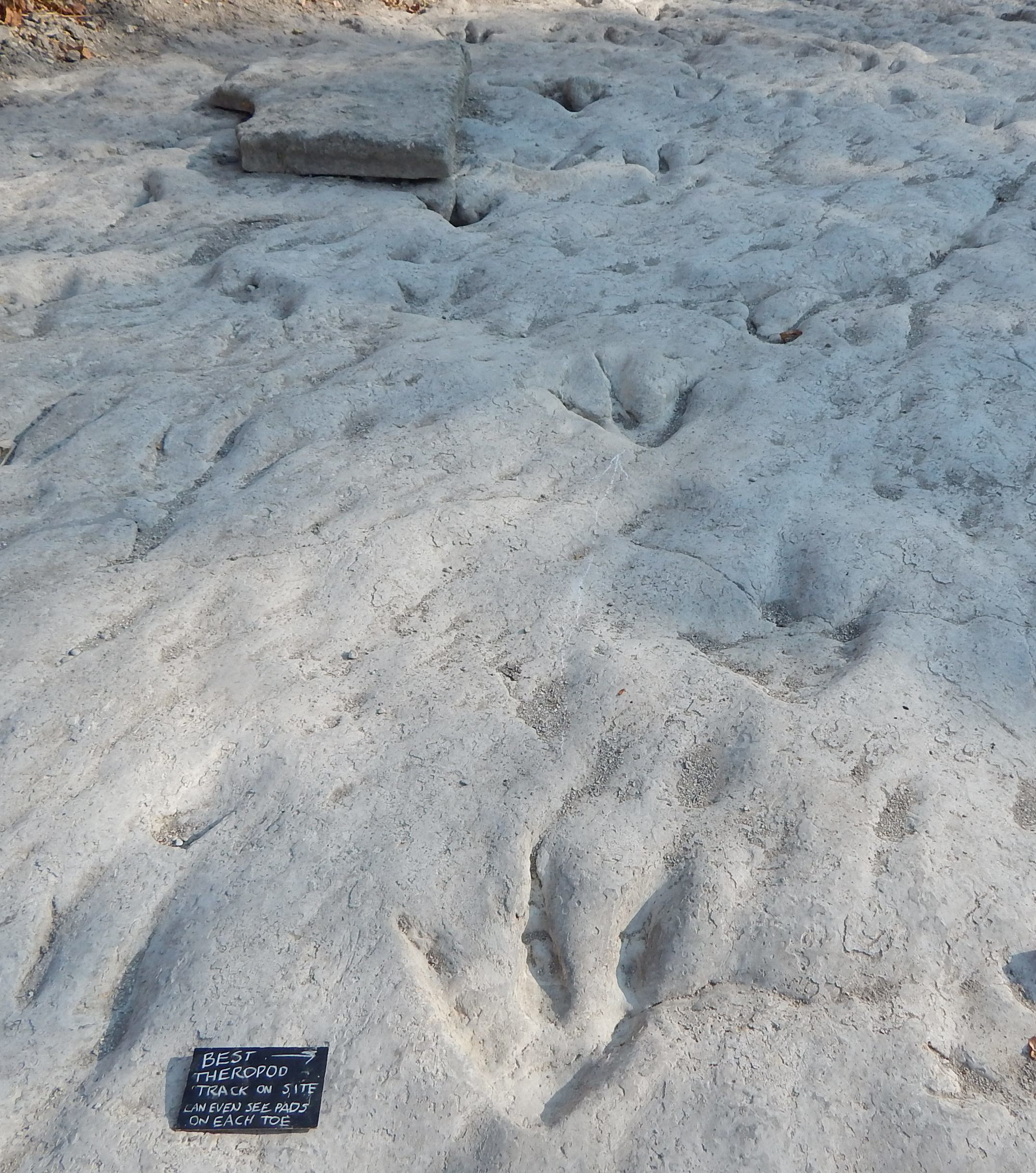
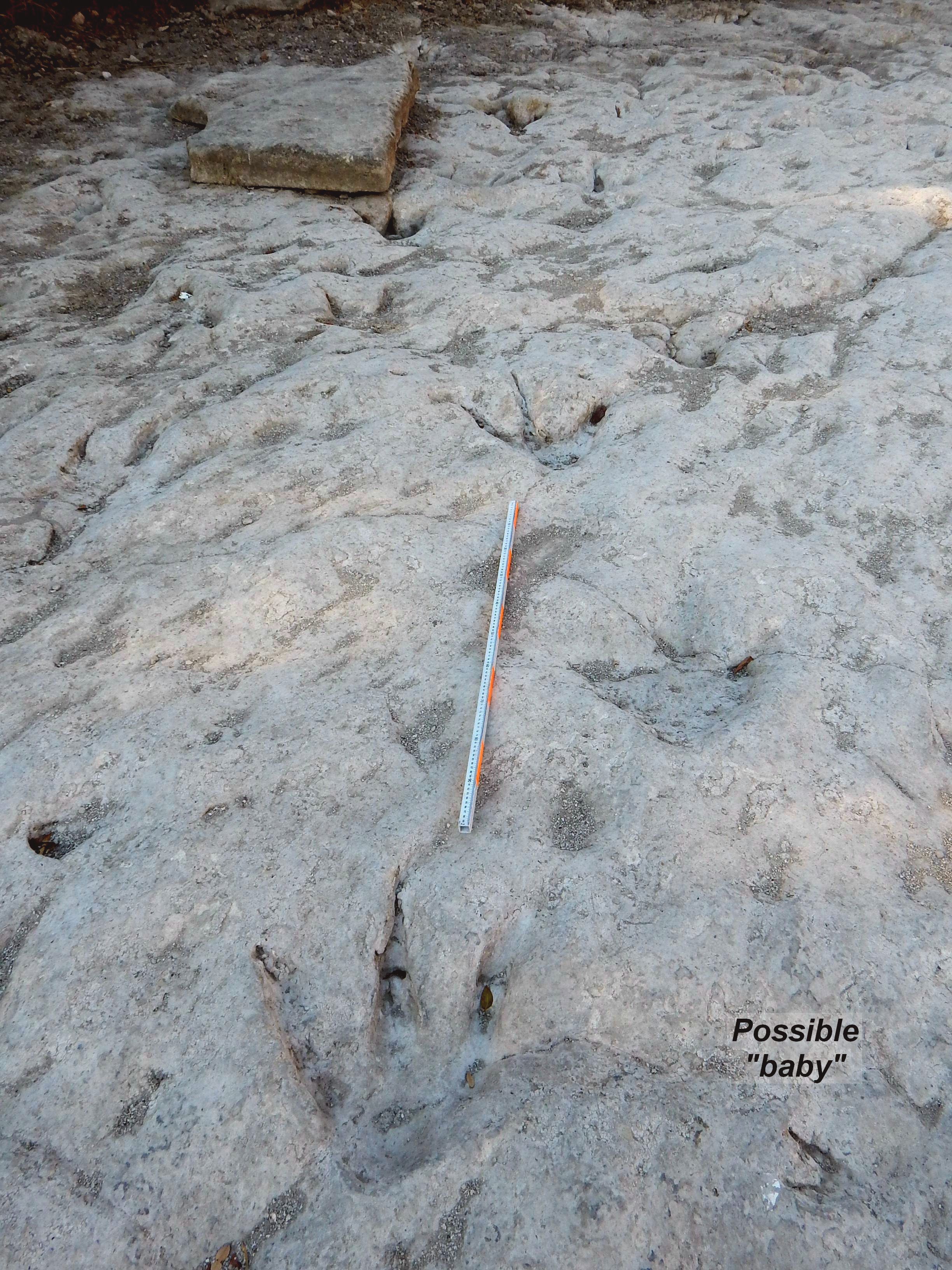
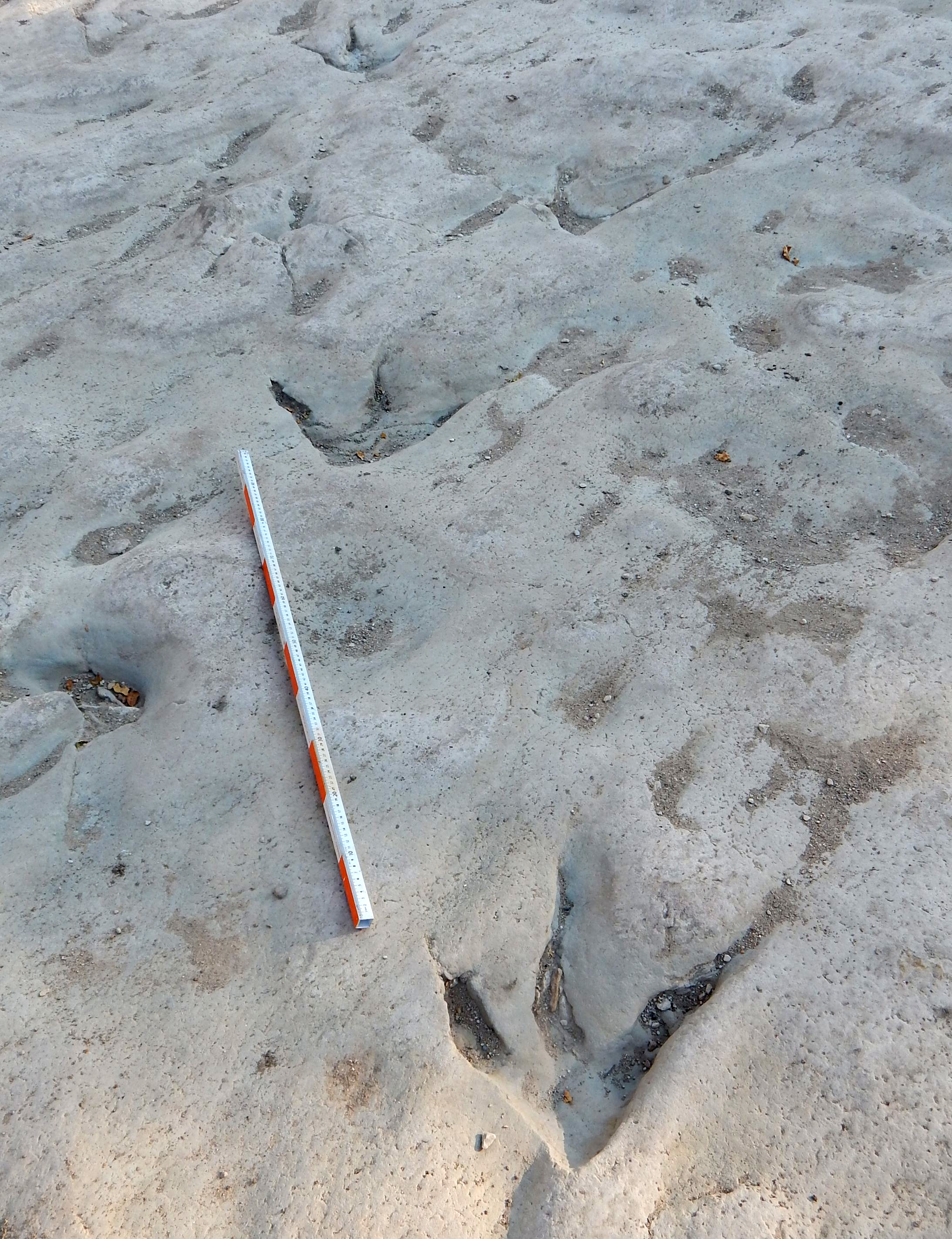
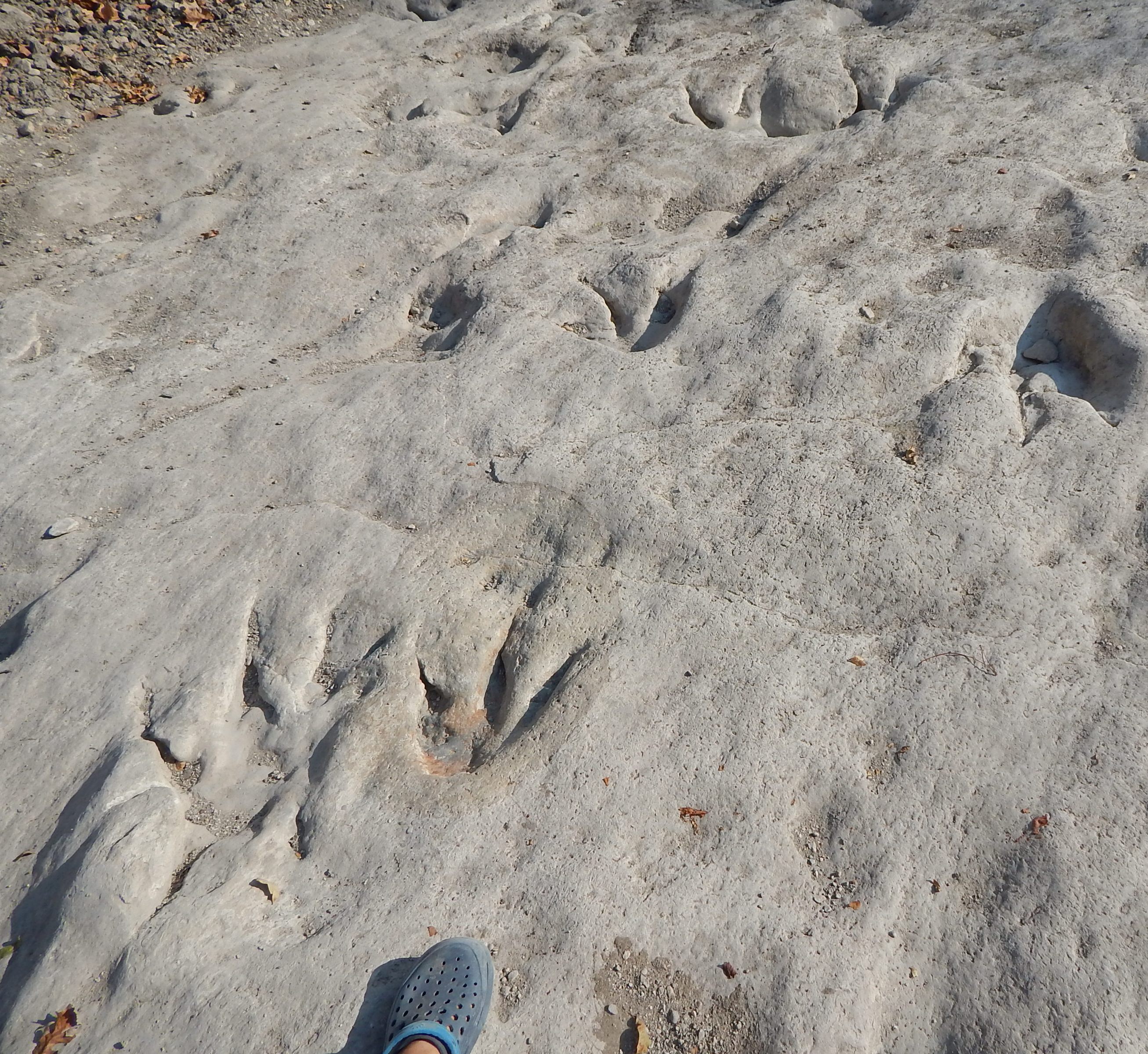
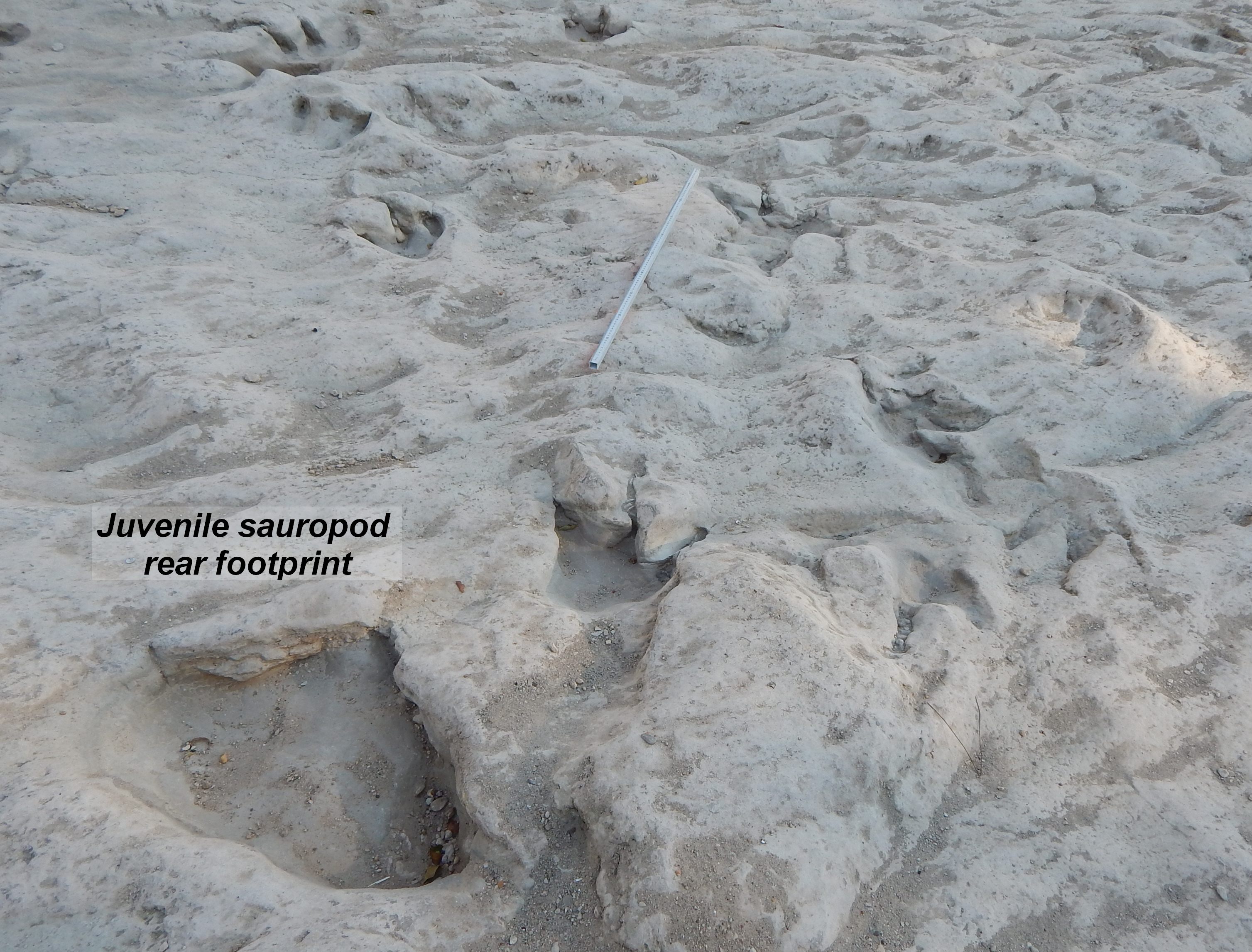
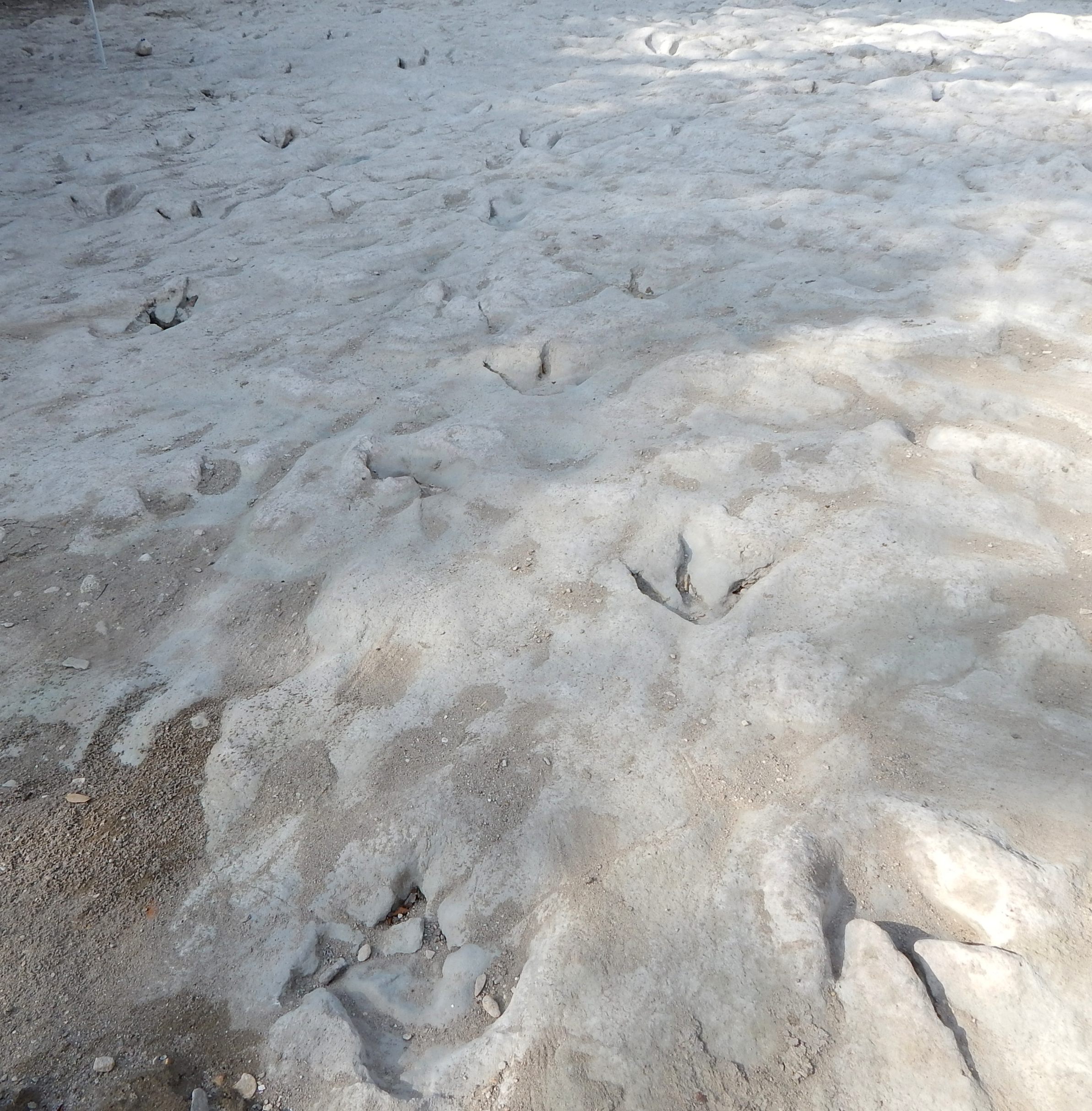
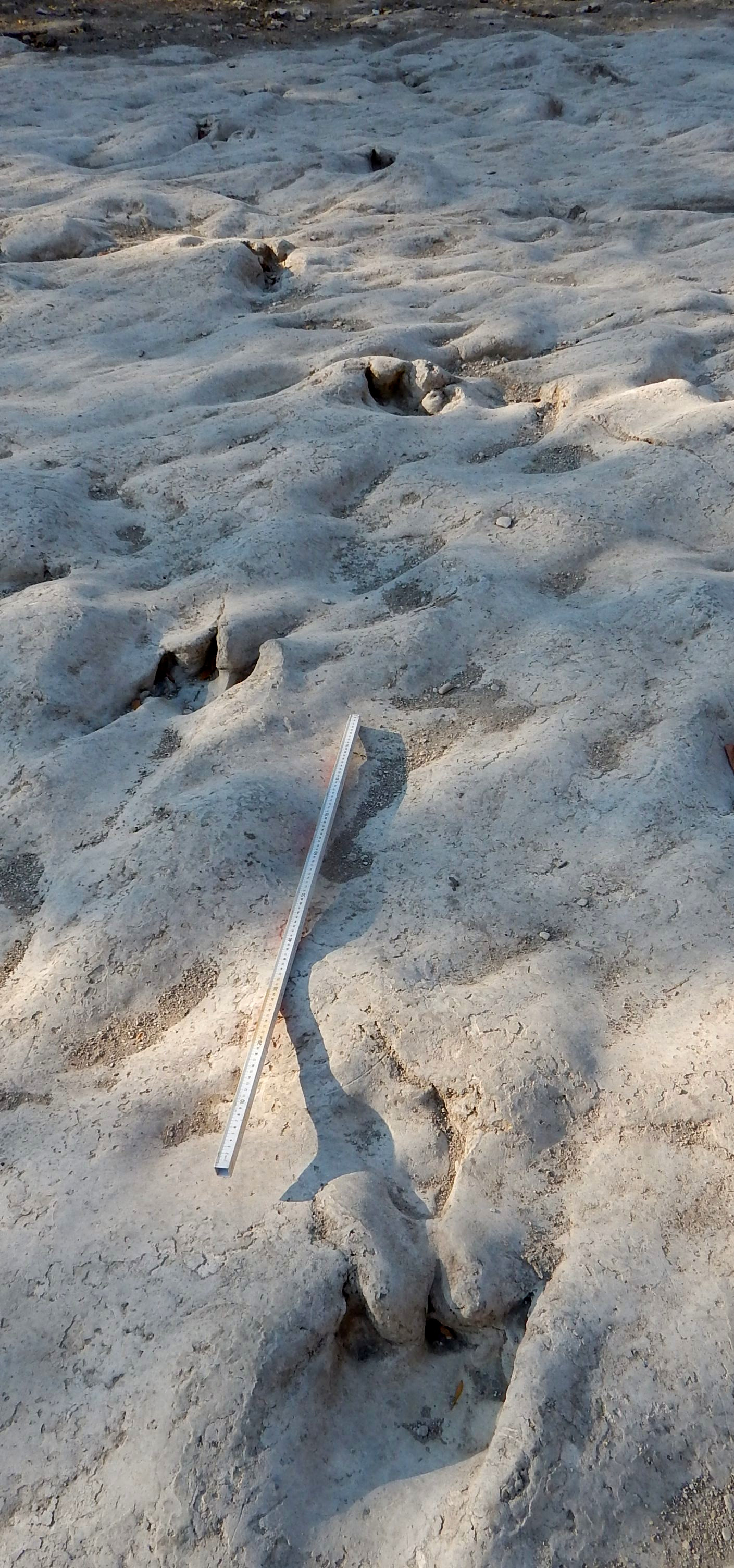
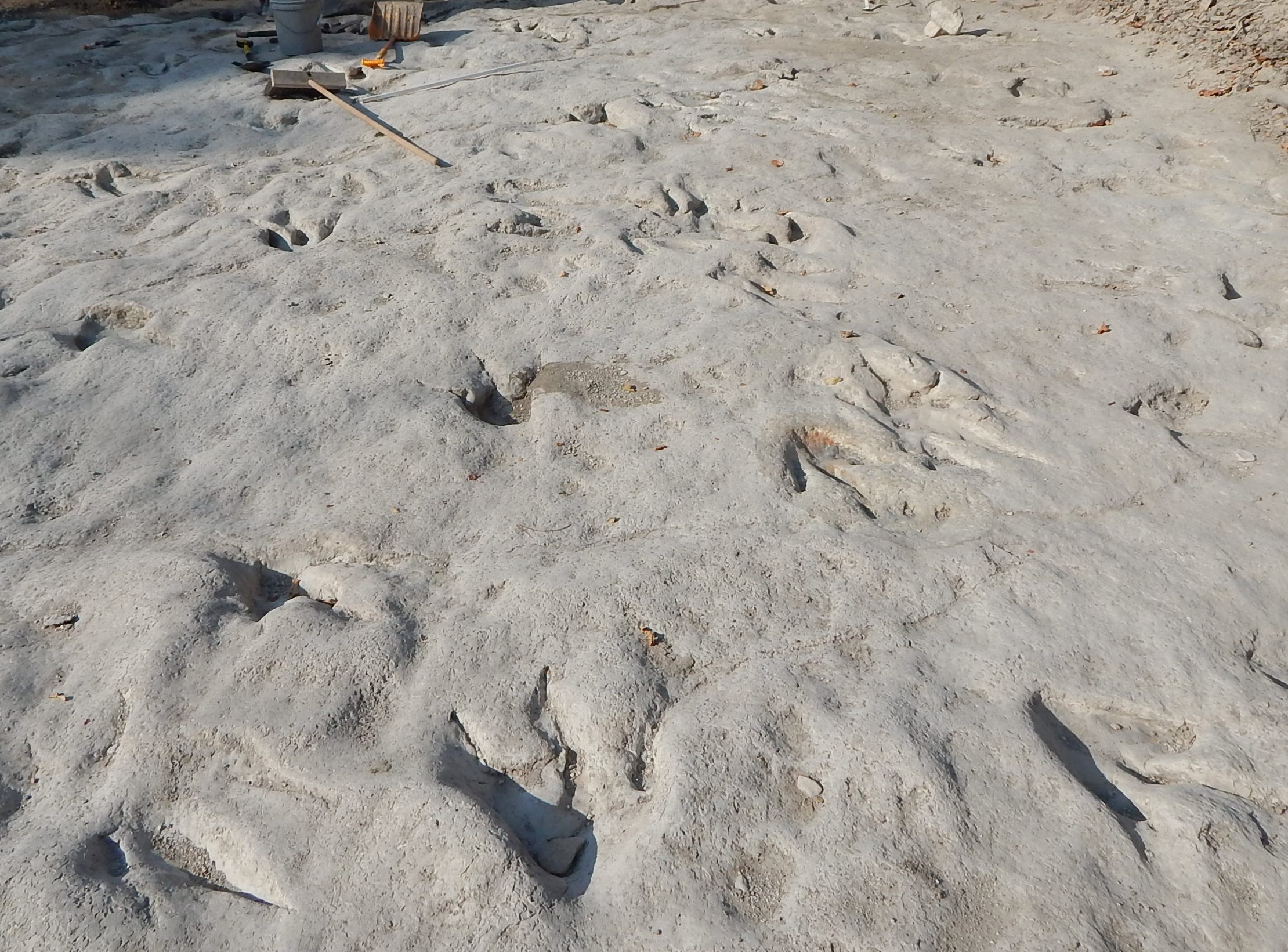
The photos below show some of the many theropod tracks on the southern sloping side of the site that were mapped in previous years. They include several trails proceeding in a northwestern direction, and some of the most distinct theropod tracks on the site, including some that even show indications of the individual digit pads. Others head in other directions, and show various degrees of mud-collapsed and preservational quality. Most (except perhaps some of the smaller ones) were probably made by the theropod (two-legged, predatory dinosaur) Acrocanthosaurus. The long furrows in the track bed (as seen in some of the photos) are often mistaken by visitors for "tail drags". However, by all evidence they are actually just river scours, since they are not straddled by any trackway and are parallel to the river flow. Moreover, tail marks are extremely rare (and usually just short swishes or touches) on track sites throughout the world. From these observations and anatomic evidence, paleontologists conclude that all dinosaurs (both two-legged and four-legged) habitually carried their tails above the ground.
Due to the severe drought in 2023, over 100 "new" (not previously recorded) tracks were found and documented farther down the slope, up to the broken southern edge of the track bed, with over a dozen more documented on a narrow exposure just to the east and south. Both of these "new" sets, and over a dozen new "baby" or small species tracks, are displayed in separate pages.