Ballroom Metatarsal Tracks 2023
For photos of Ballroom photos from previous years, see:http://paleo.cc/paluxy/ballroom/Ballroom Menu.htm
All photos (C) 2023 Glen J. Kuban unless otherwise indicated
Elongate, metatarsal tracks are made when the metatarsus (sole and heel) of the dinosaur's foot impresses into the sediment instead of just the toes, as is more typically the case. Metatarsal tracks occur on several areas of the Ballroom site. Most occur in trails that also contain normal digitigrade (toe-walking or non-metatarsal) tracks, indicating that metatarsal prints do not indicate a habitual or obligatory heel-walking behavior, but rather an occasional or intermittent occurrence. I believe such tracks probably reflect dinosaurs lowering their posture (and thus impressing their heels) while attempting to gain better footing in soft, slippery mud, and/or when foraging for small food items in mud and shallow water, although some with steep angles may simply reflect incidental metatarsal impressions due to the depth of the print. In the norther area of the Ballroom site, some partial and one full metatarsal track occur where a long "squiggle" trail ends, suggesting a dinosaur may have lowered itself to snack on the squiggle creature, which may have been a walking fish (covered further in a separate gallery page).
Click on any thumbnail image for full sized image. Right click on the large image to download. Hit BACK buttom to return to gallery menu
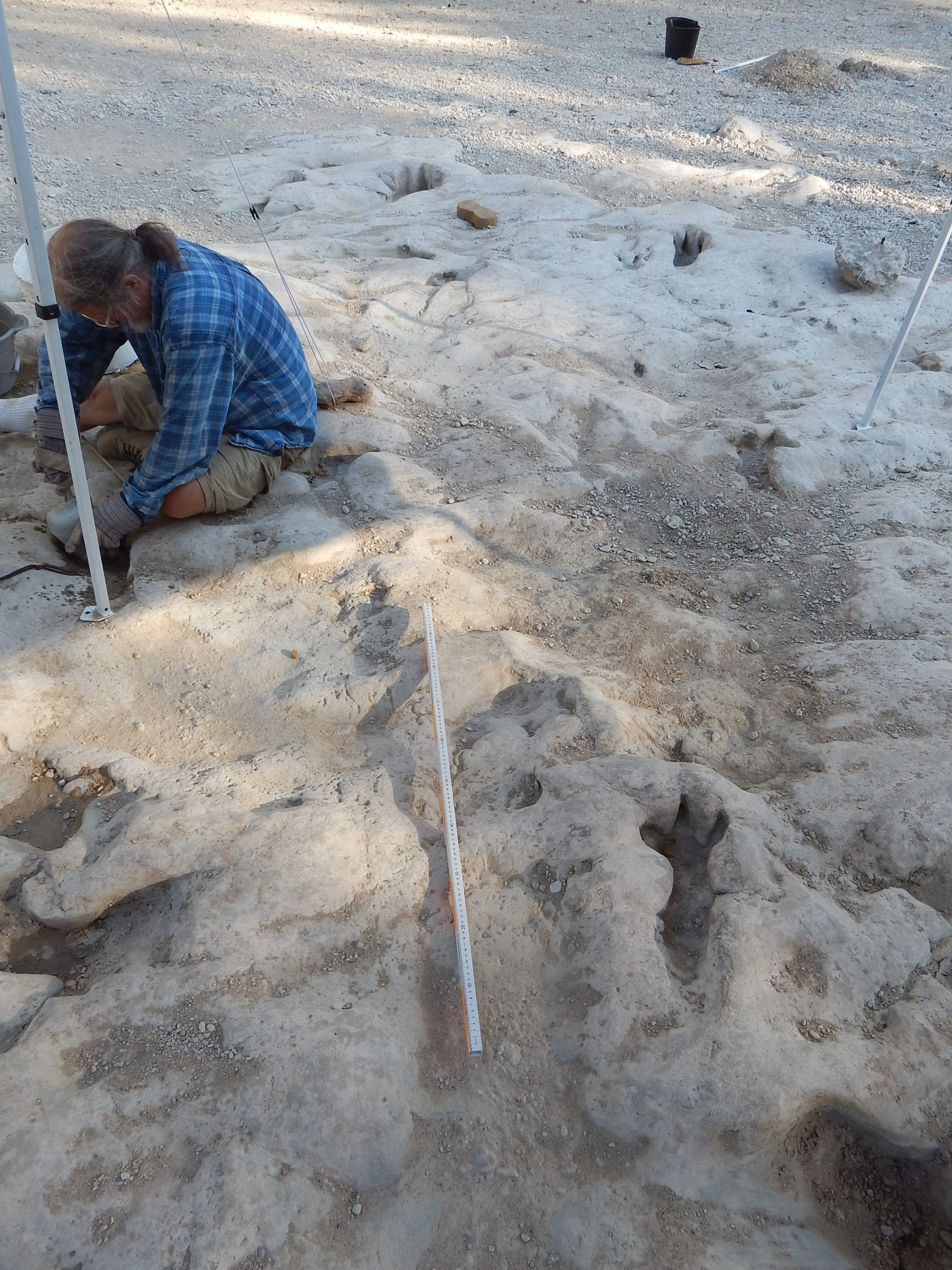
DSCN0457cr Phil Scoggins w metatarsal tracks.jpg |
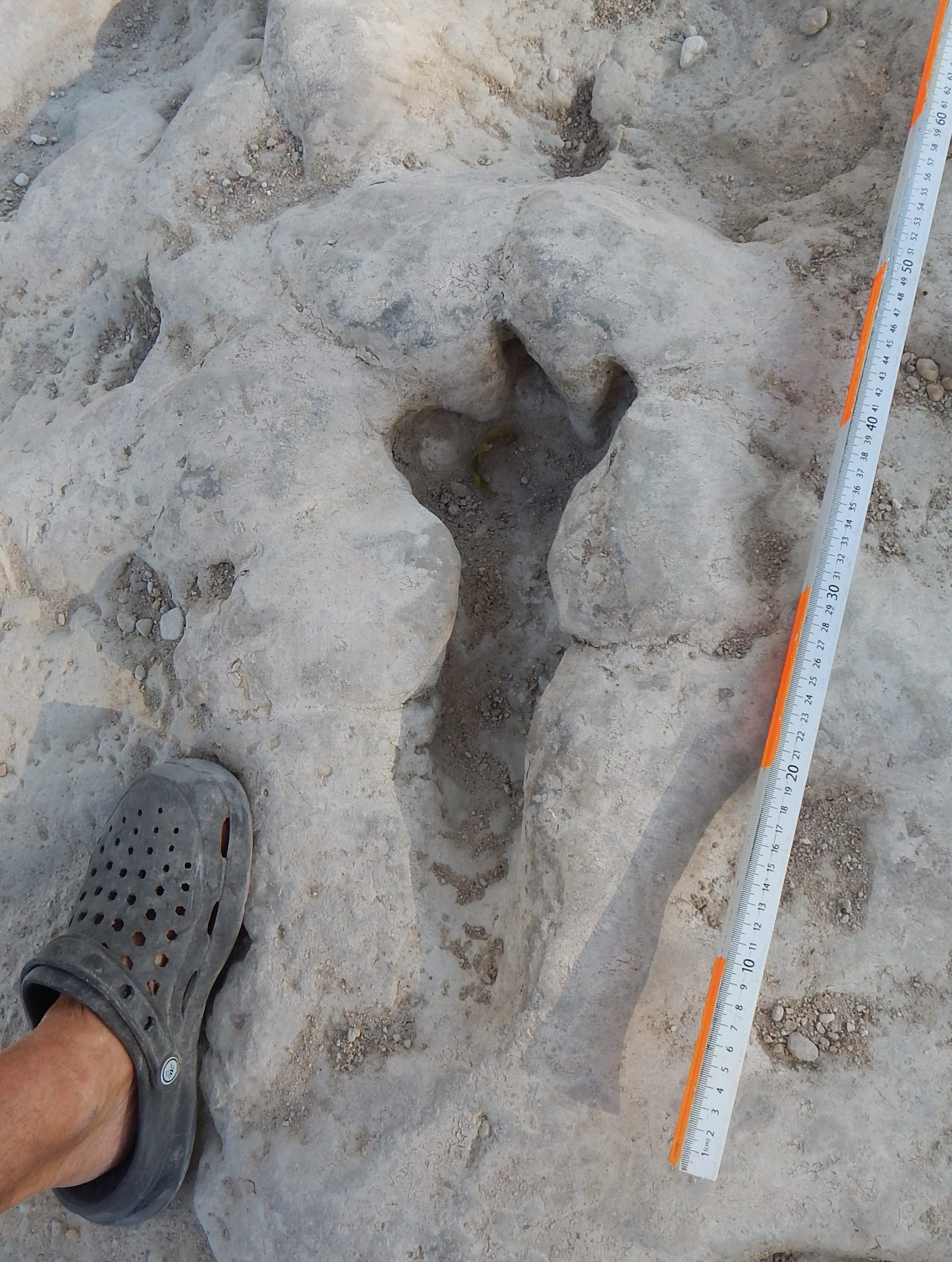
DSCN0458cr Mud collapsed metatarsal track.jpg |

DSCN0717cr Squiggle metetarsal n baby.jpg |
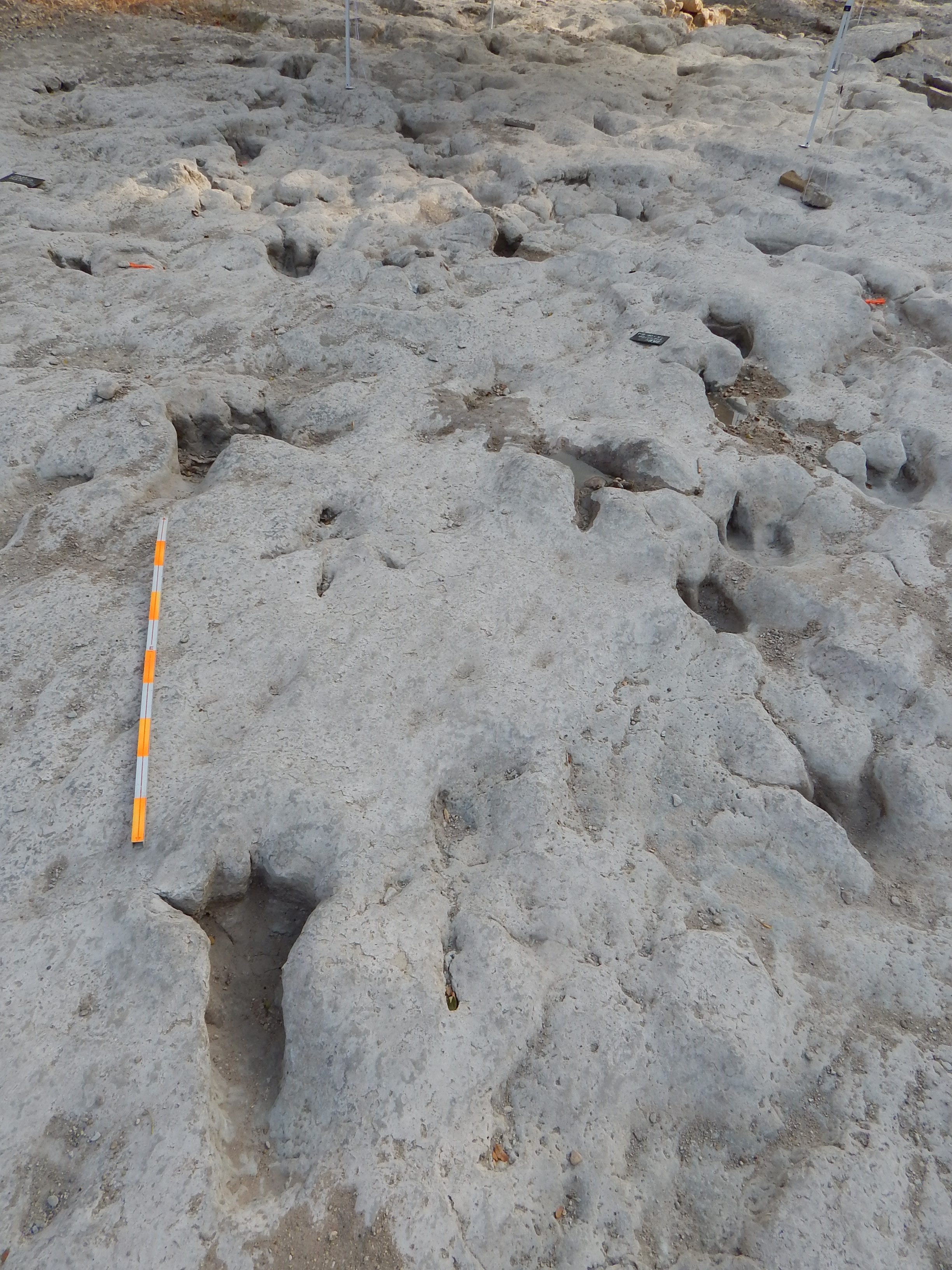
DSCN0723 Metatarsal near squiggle.jpg |