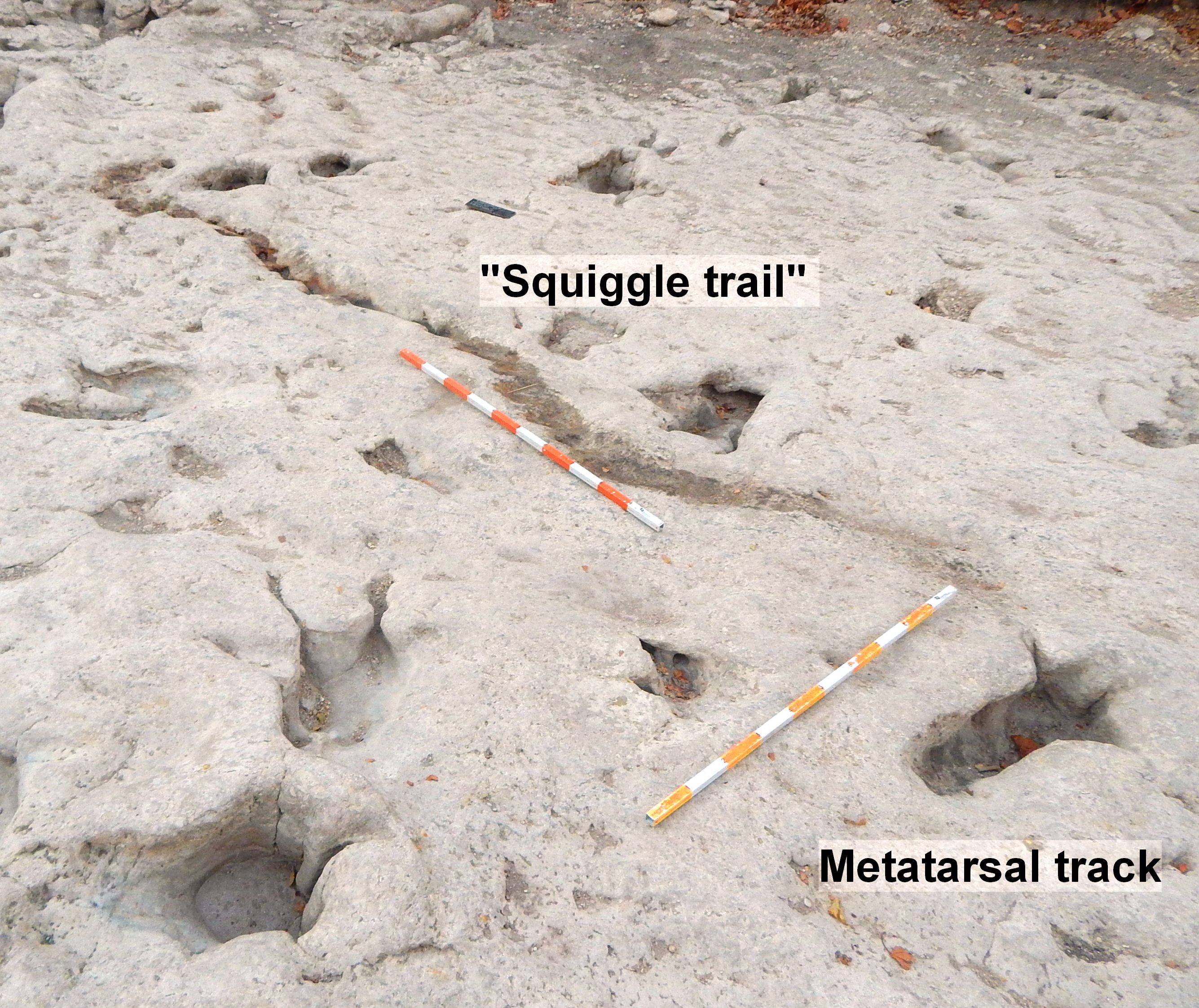
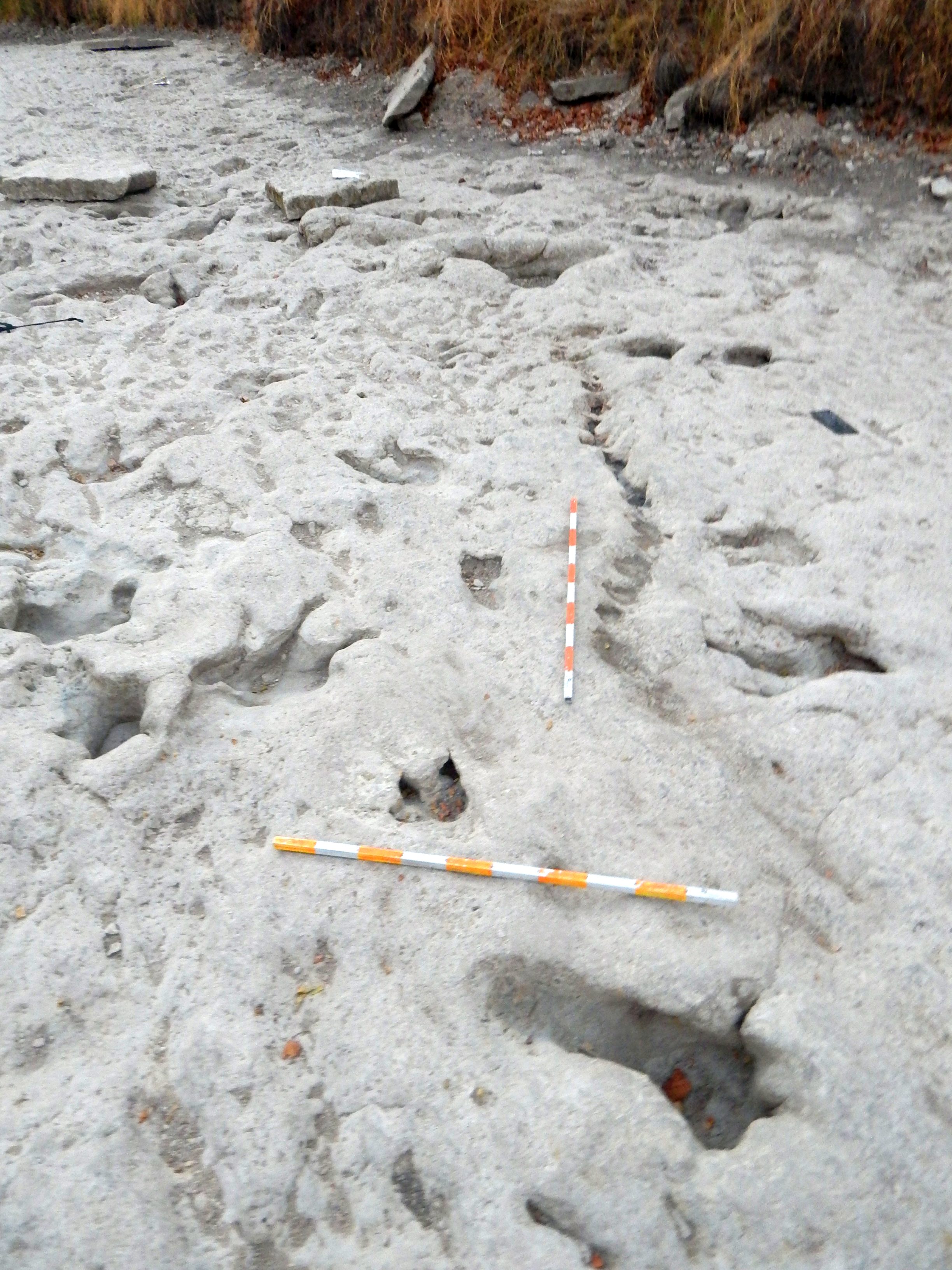
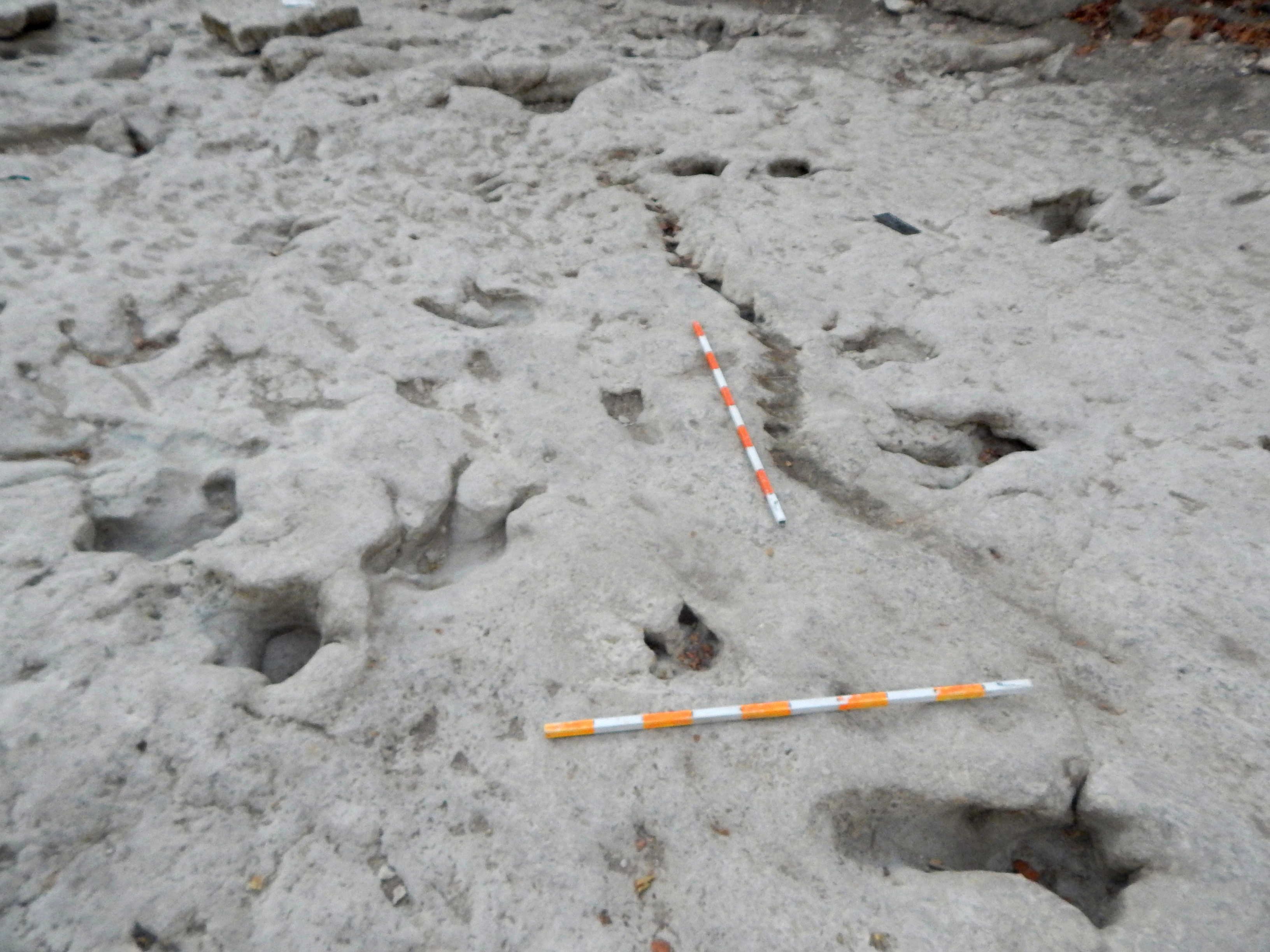
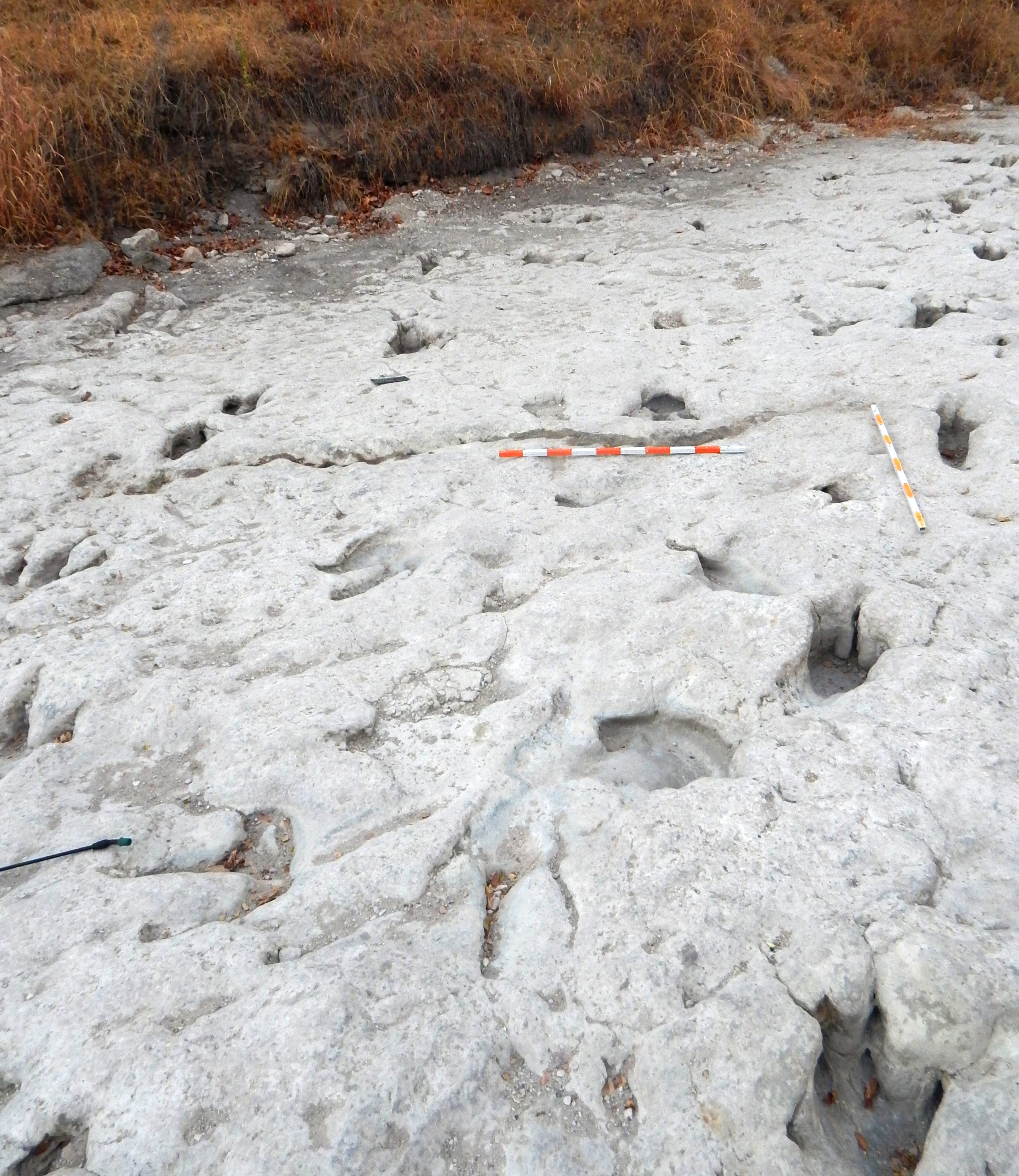
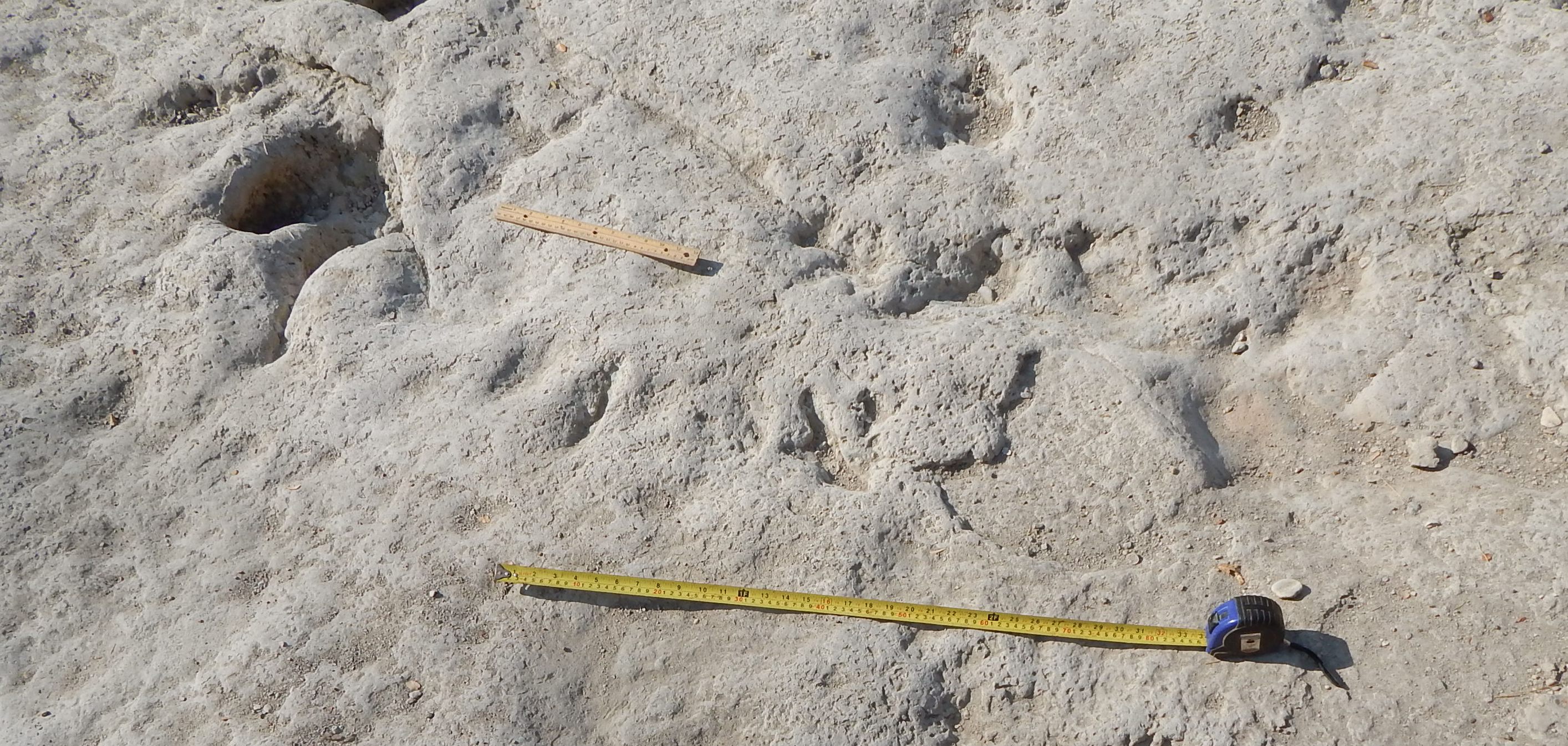
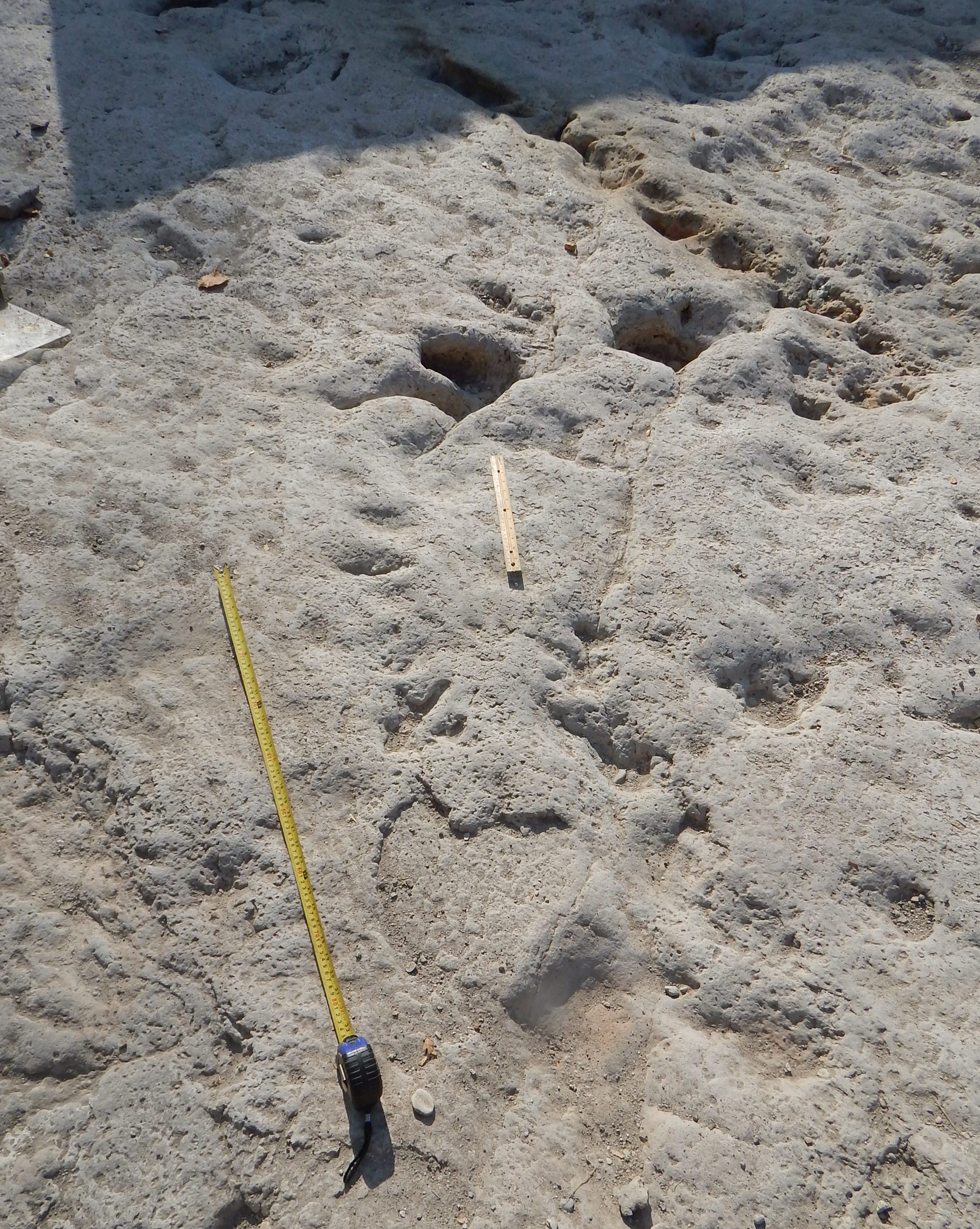
Ballroom "Squiggles", 2023
For photos of Ballroom photos from previous years, see:
http://paleo.cc/paluxy/ballroom/Ballroom Menu.htm
All photos (C) 2023 Glen J. Kuban unless otherwise indicated
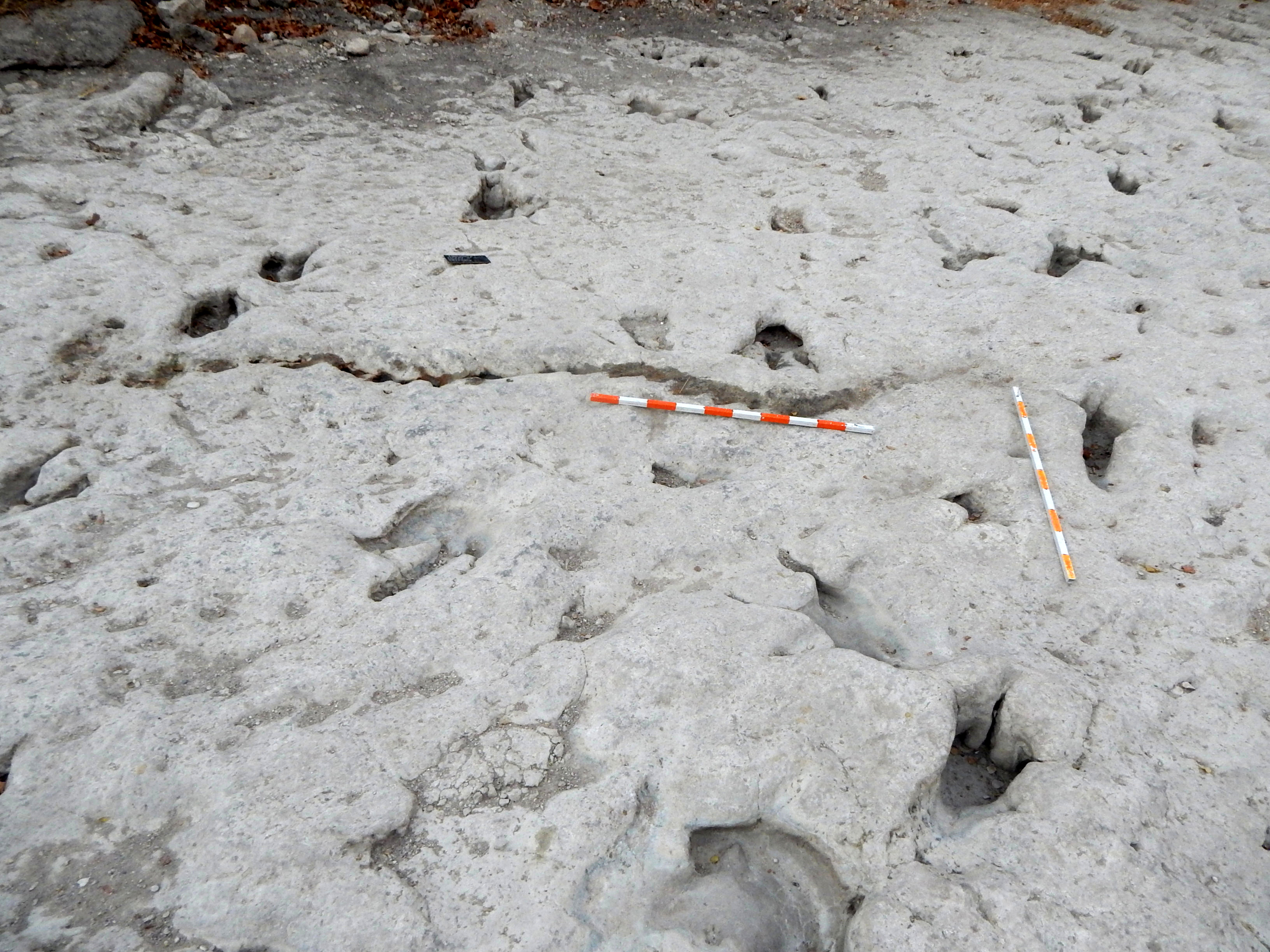
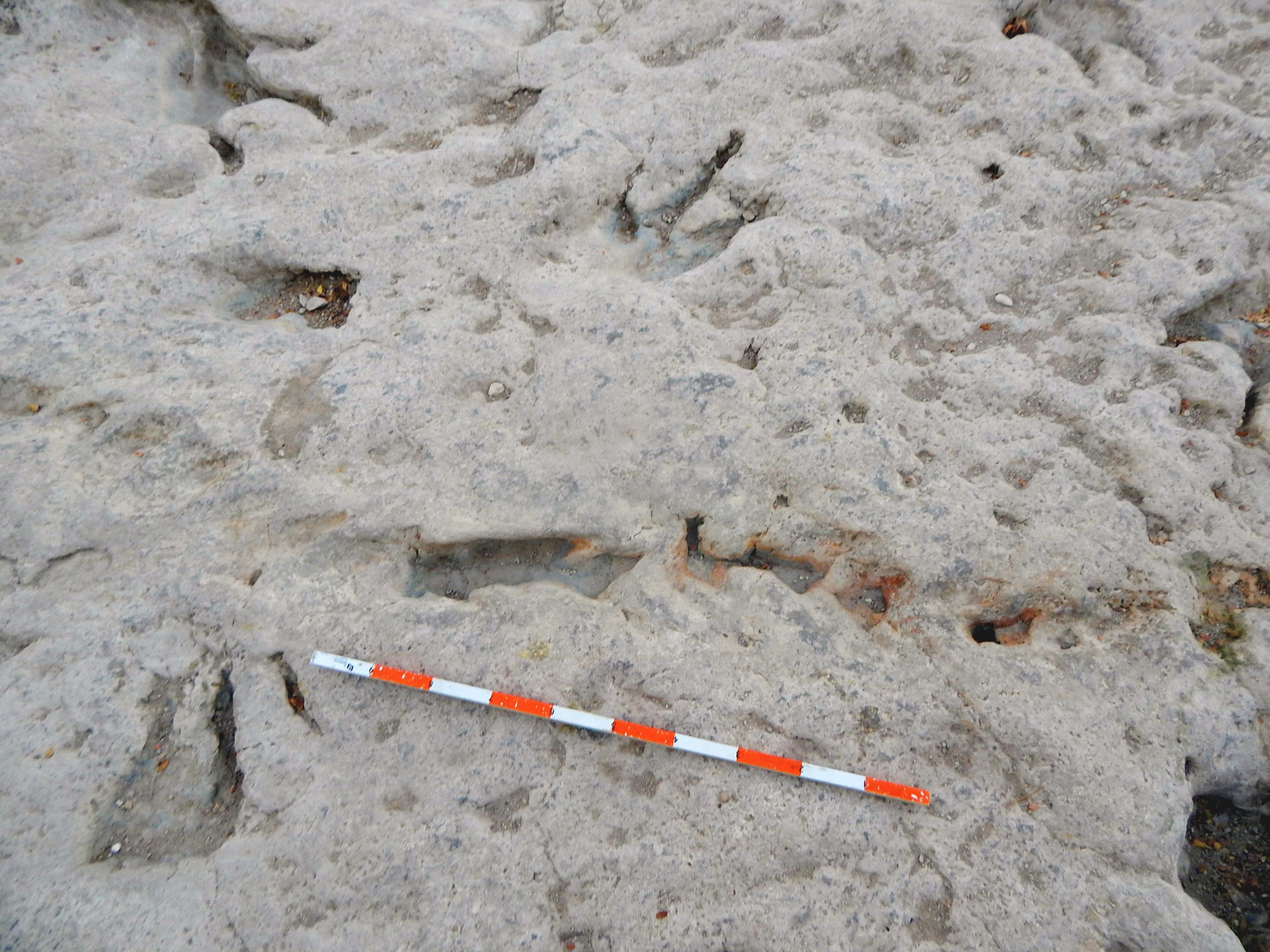
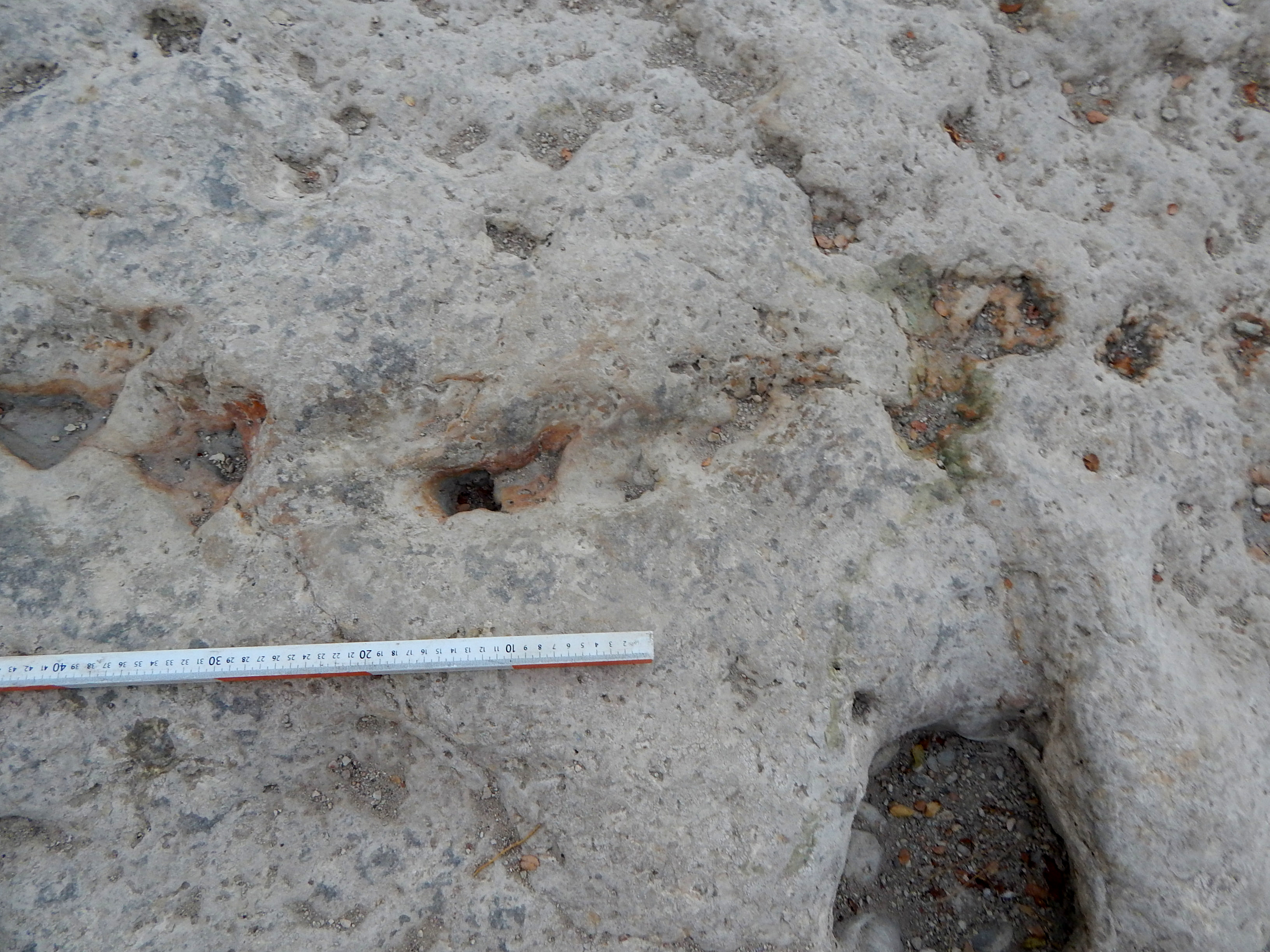
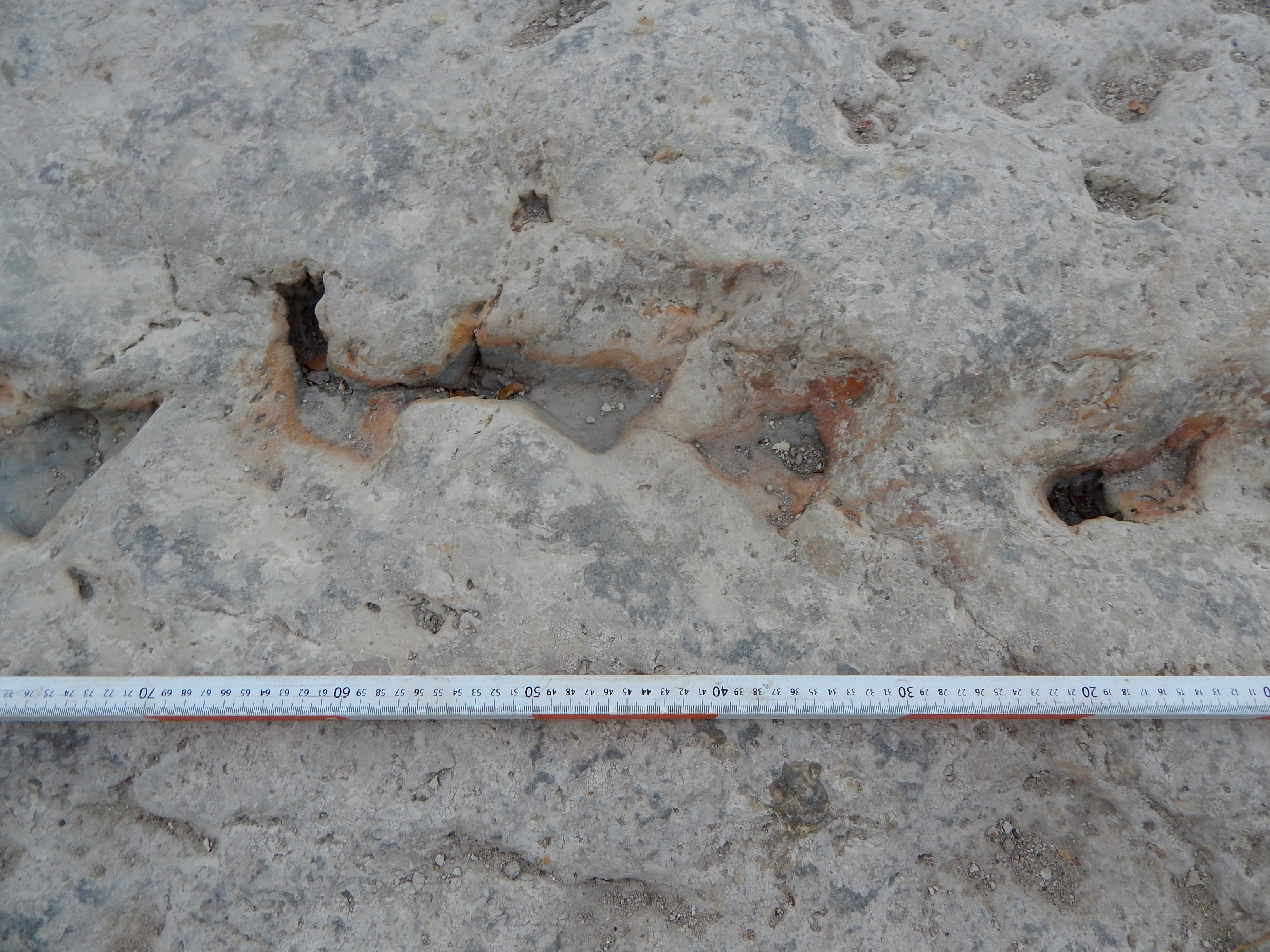
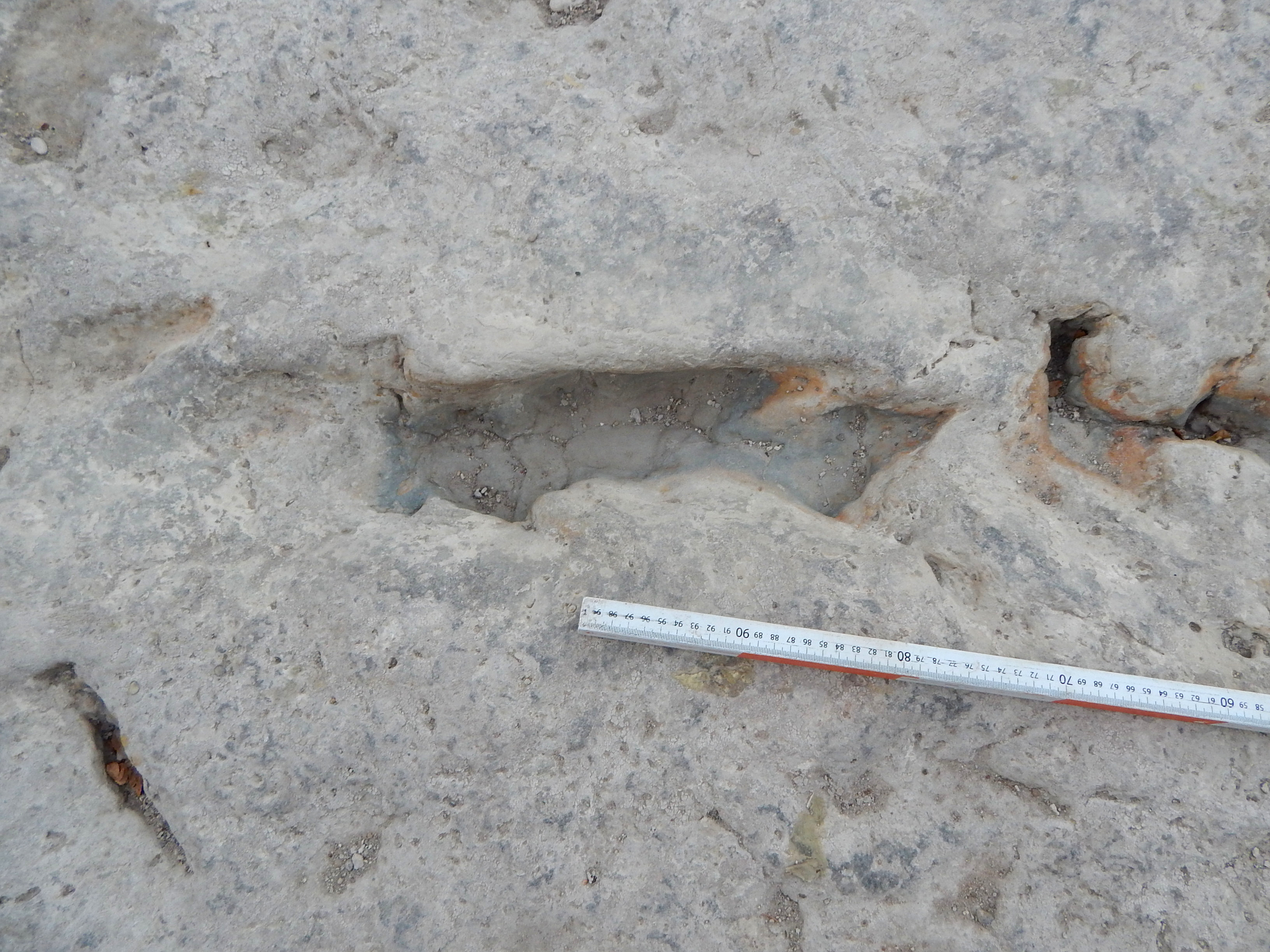
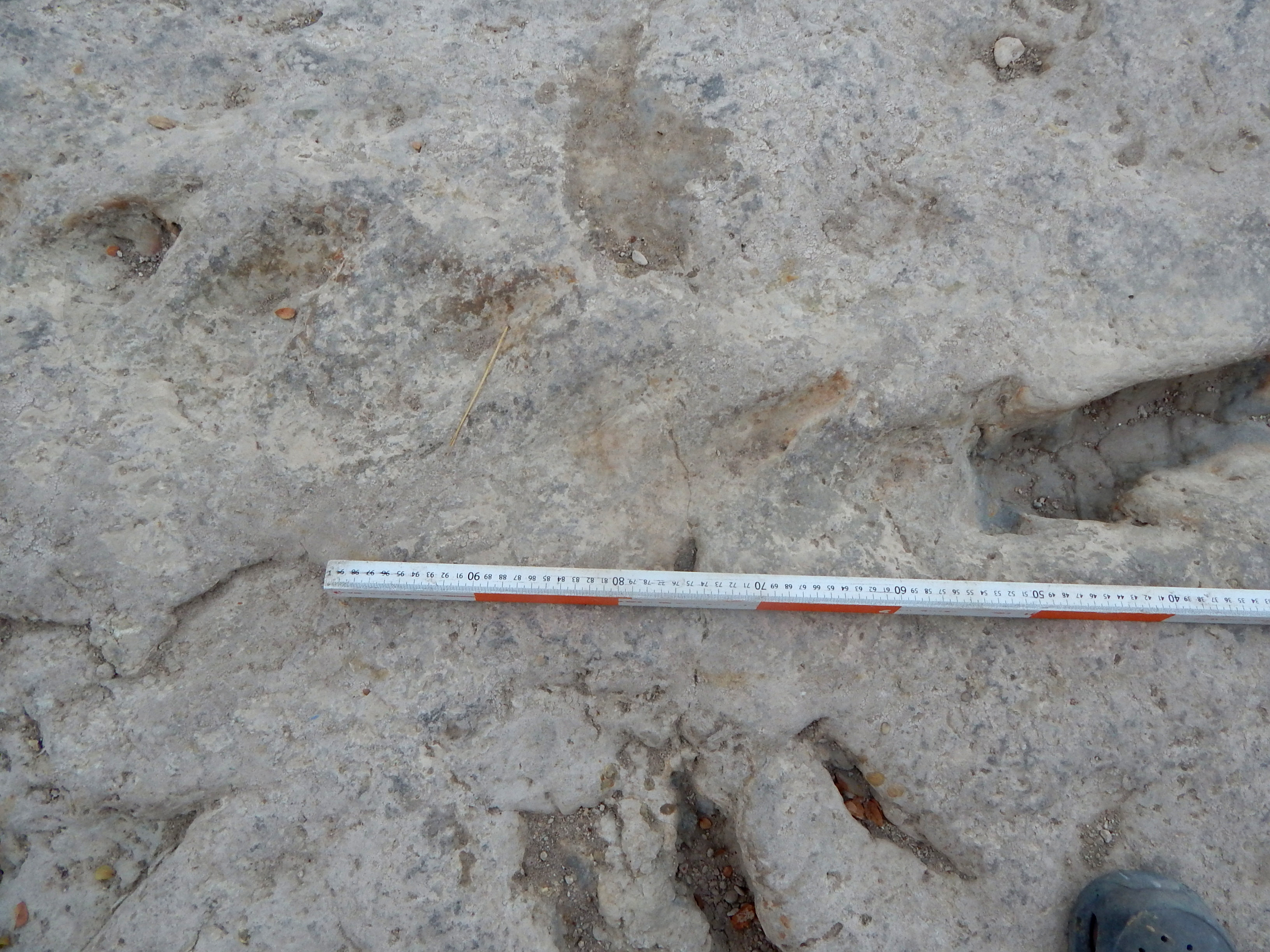
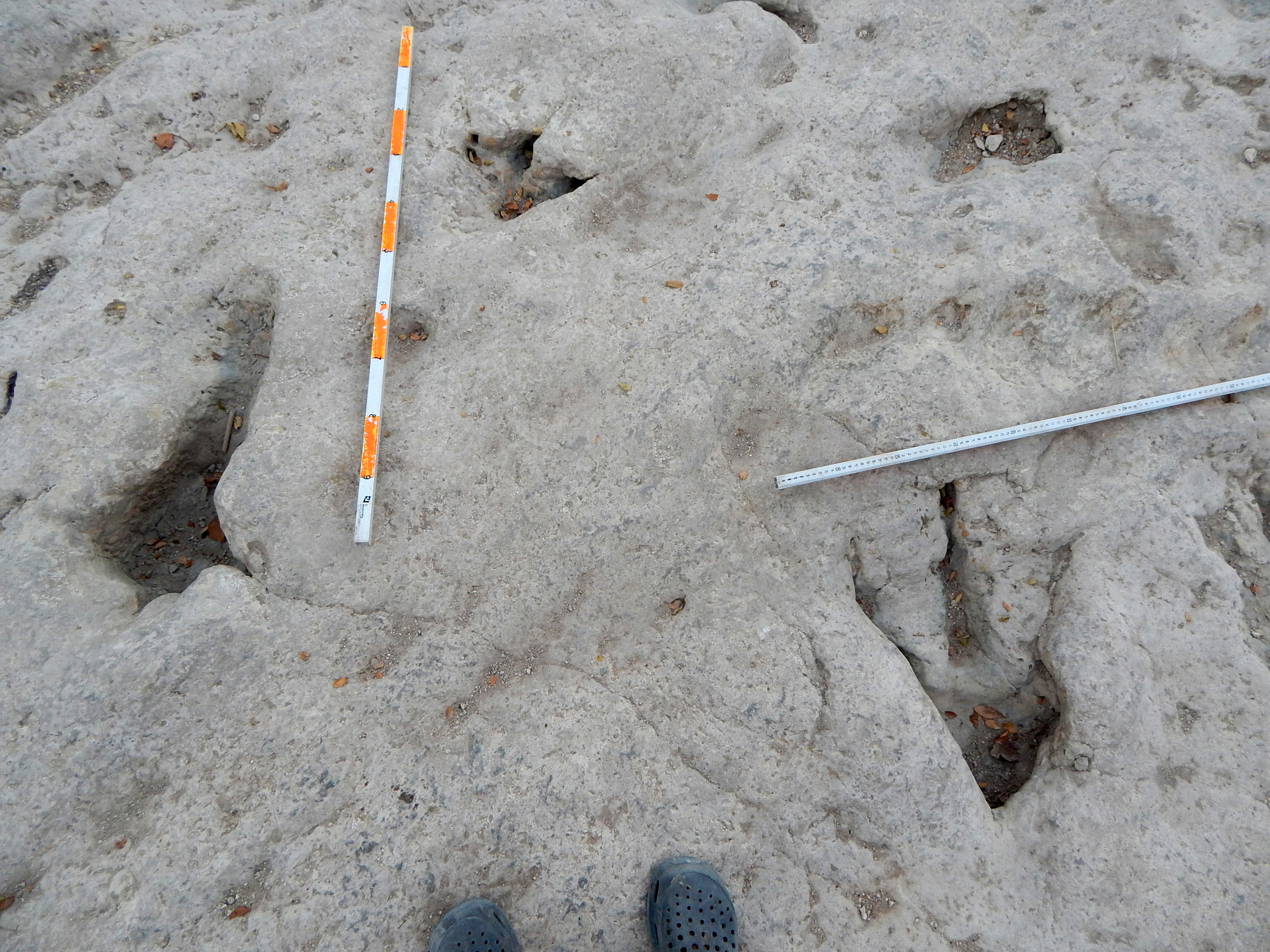
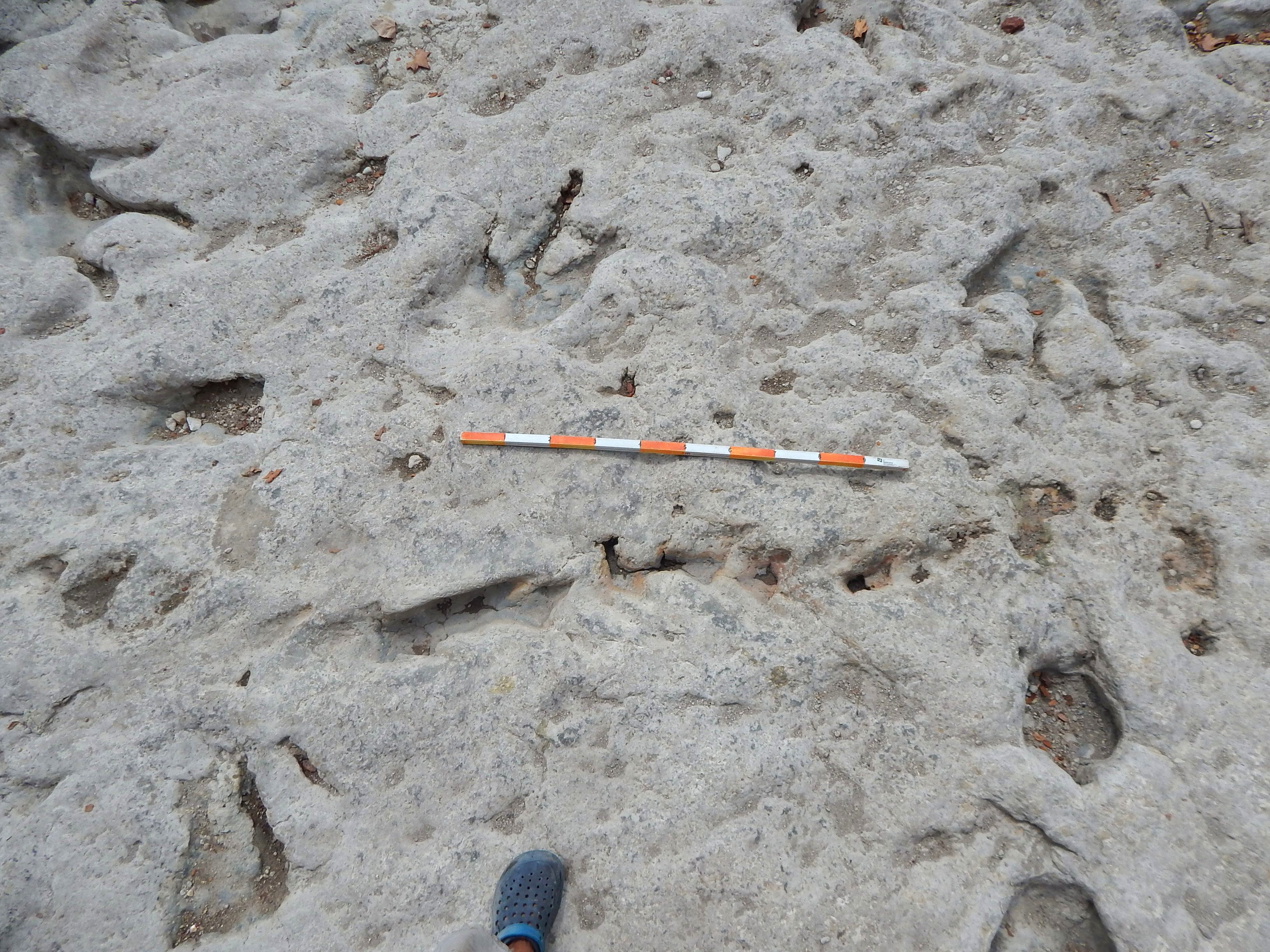
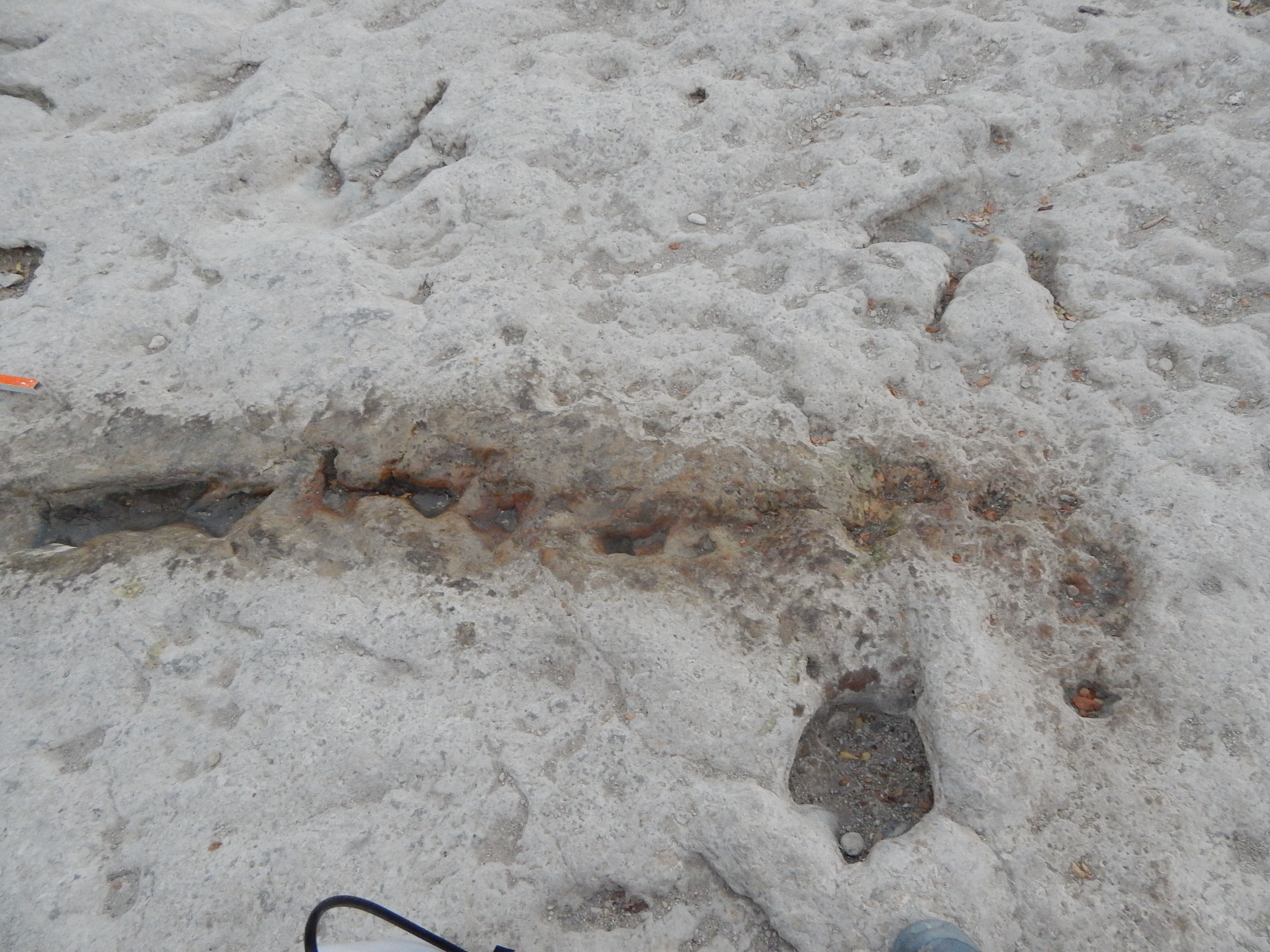
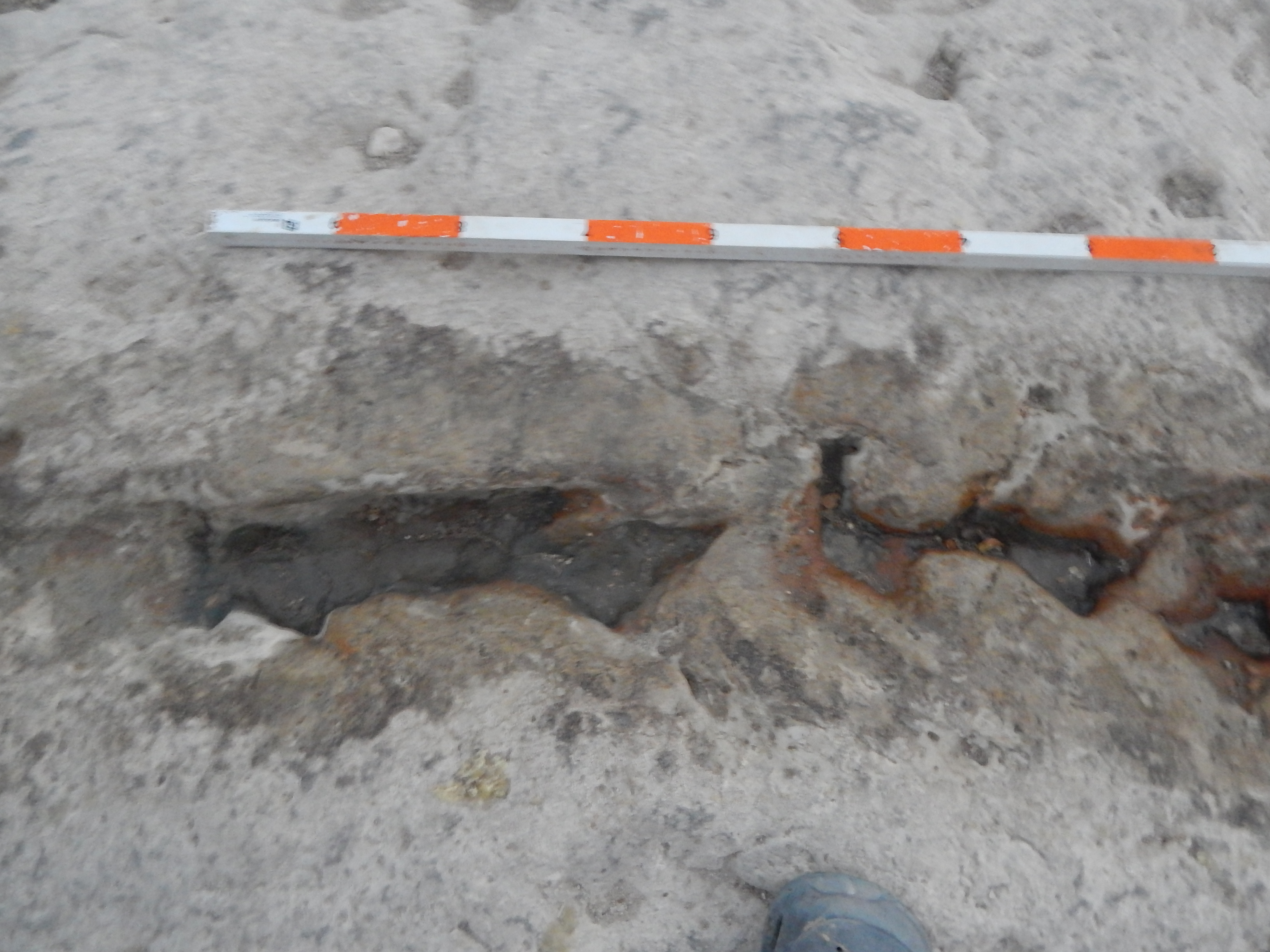
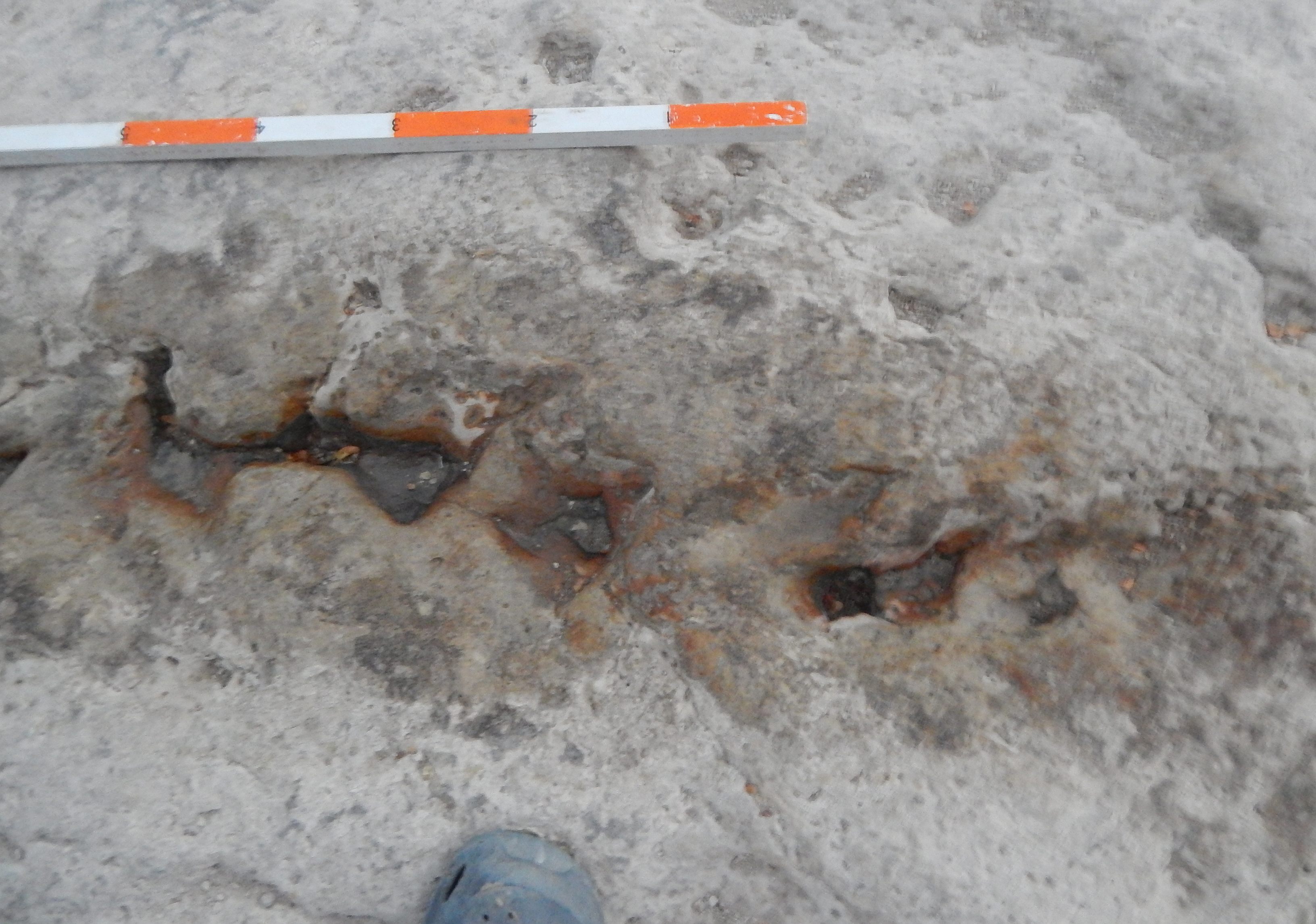
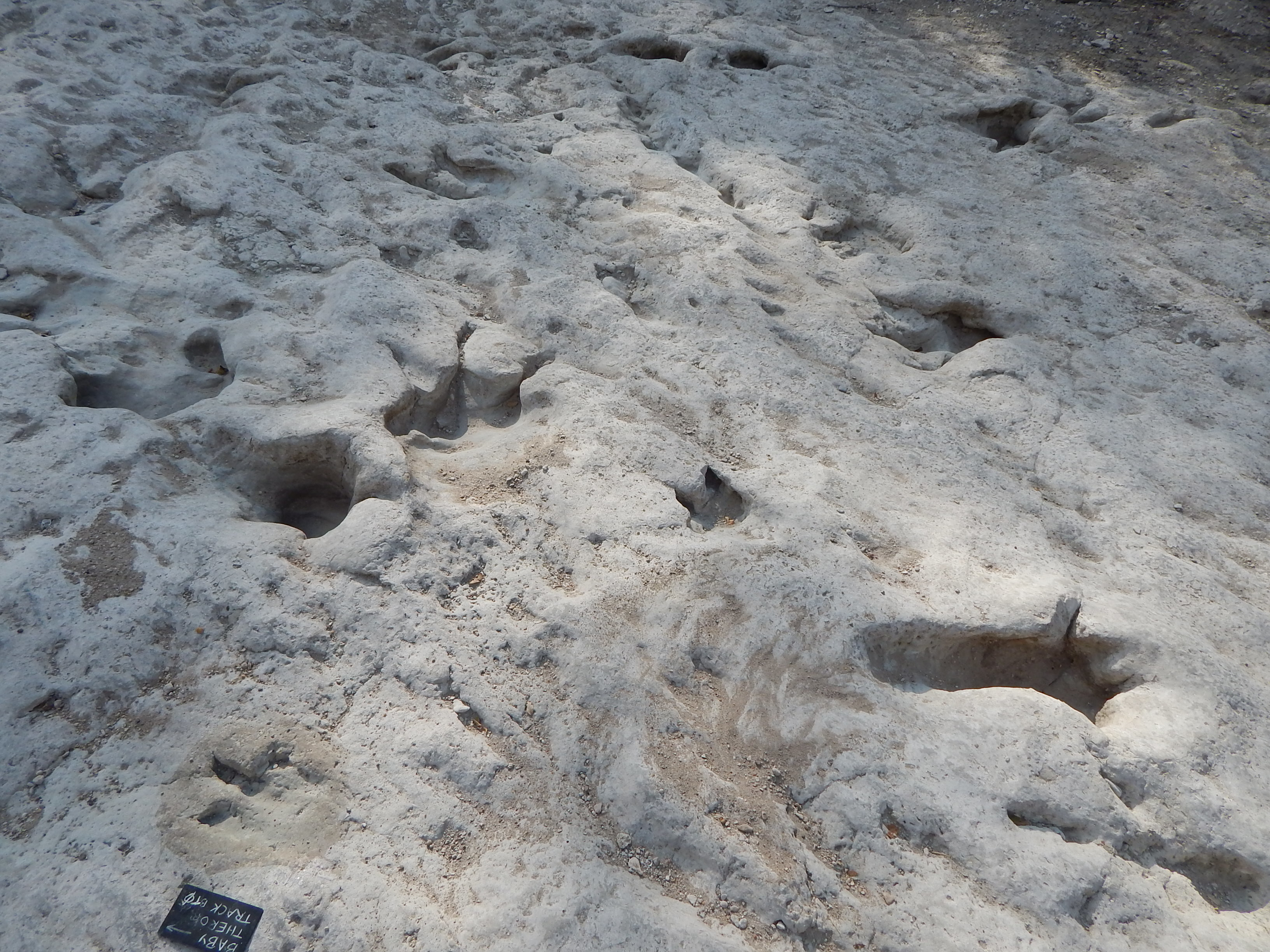
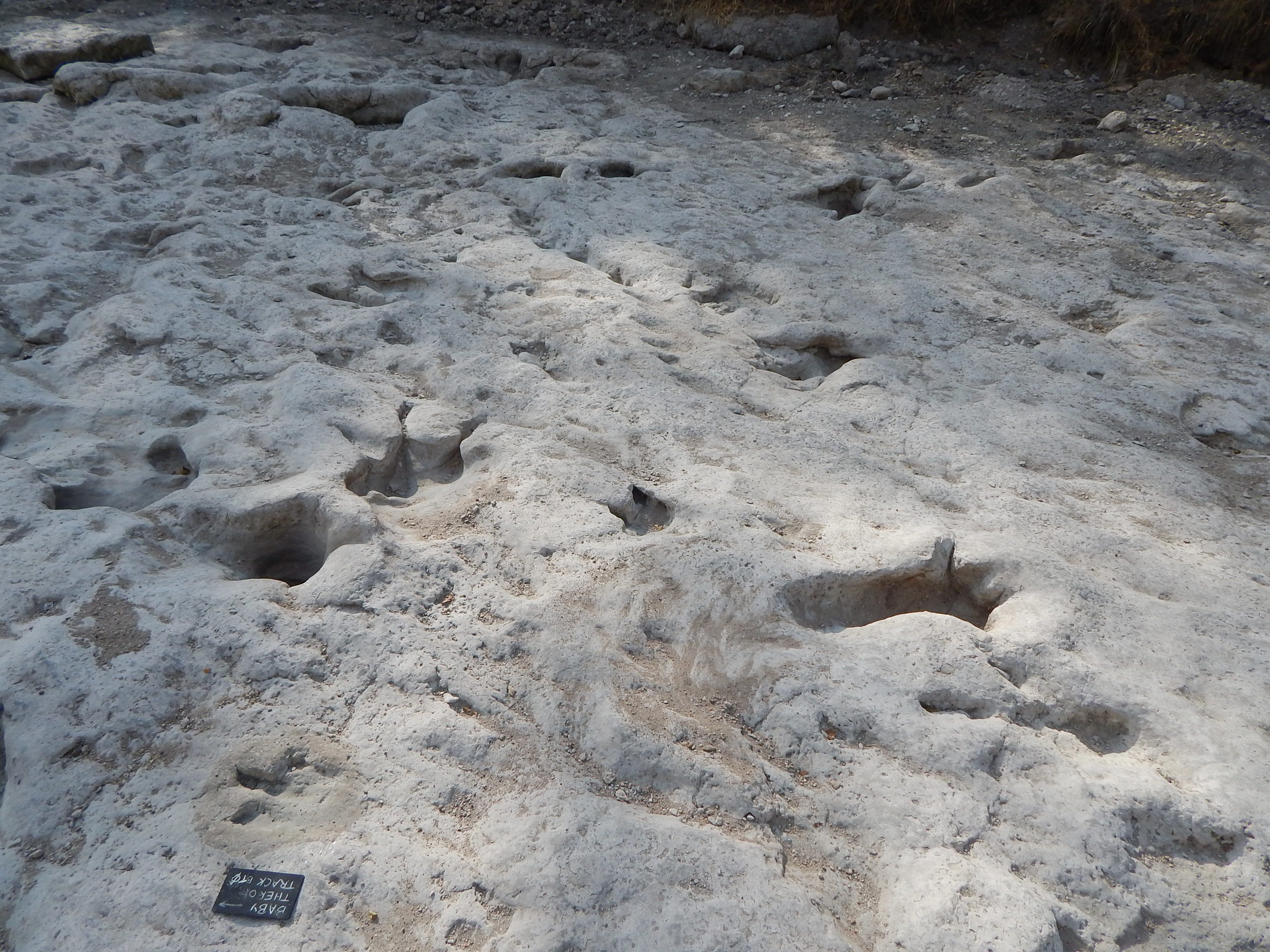
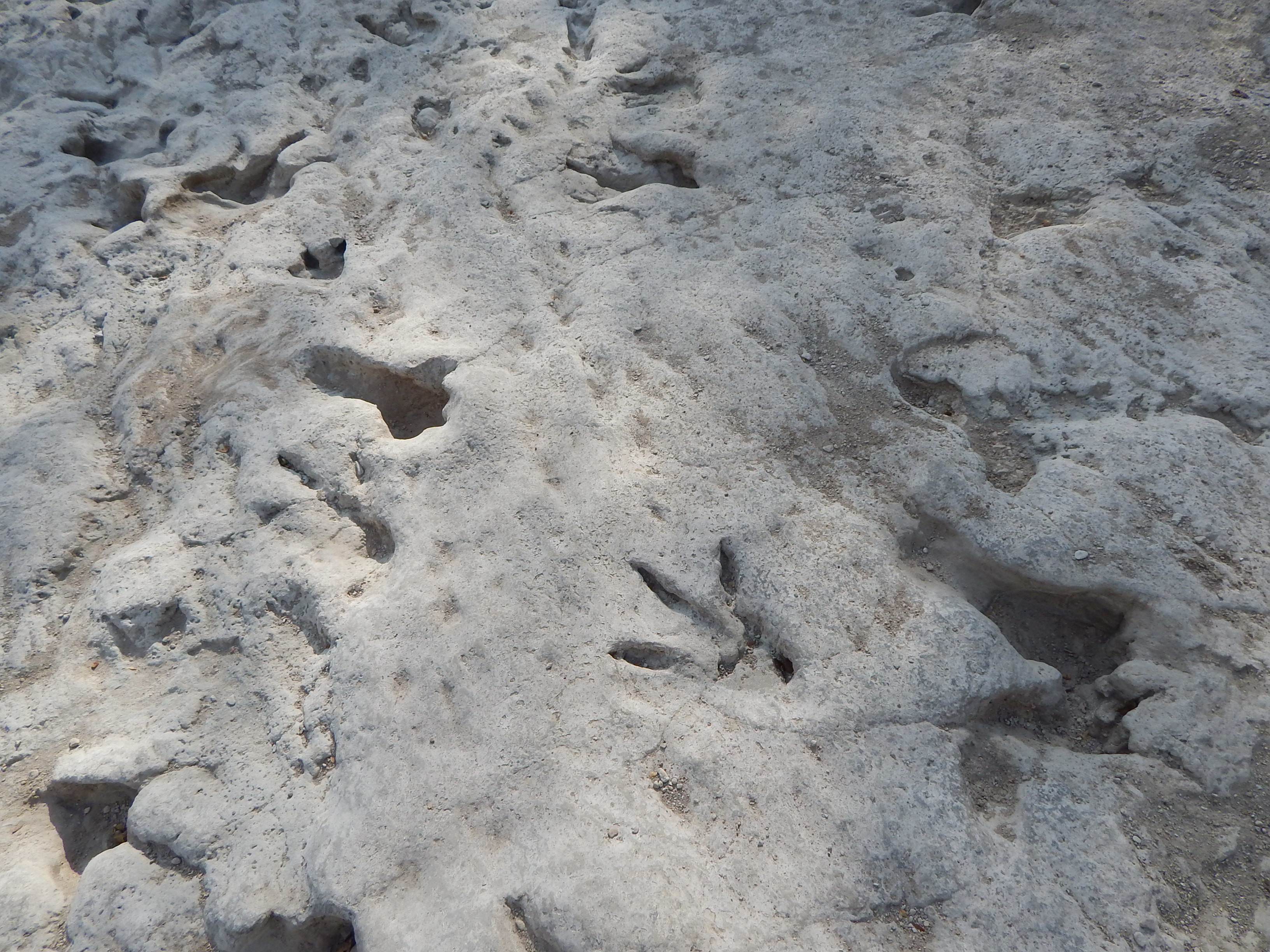
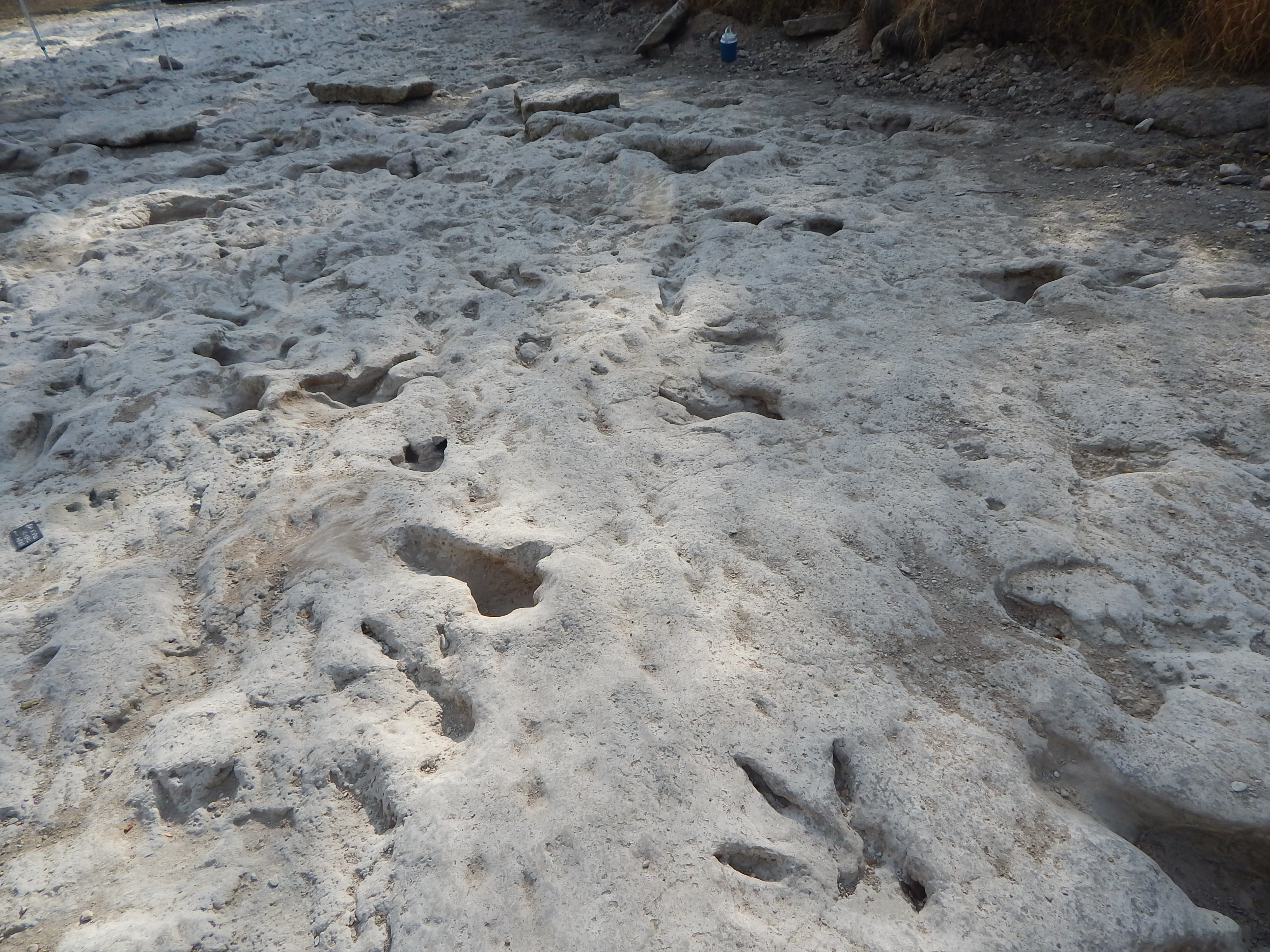
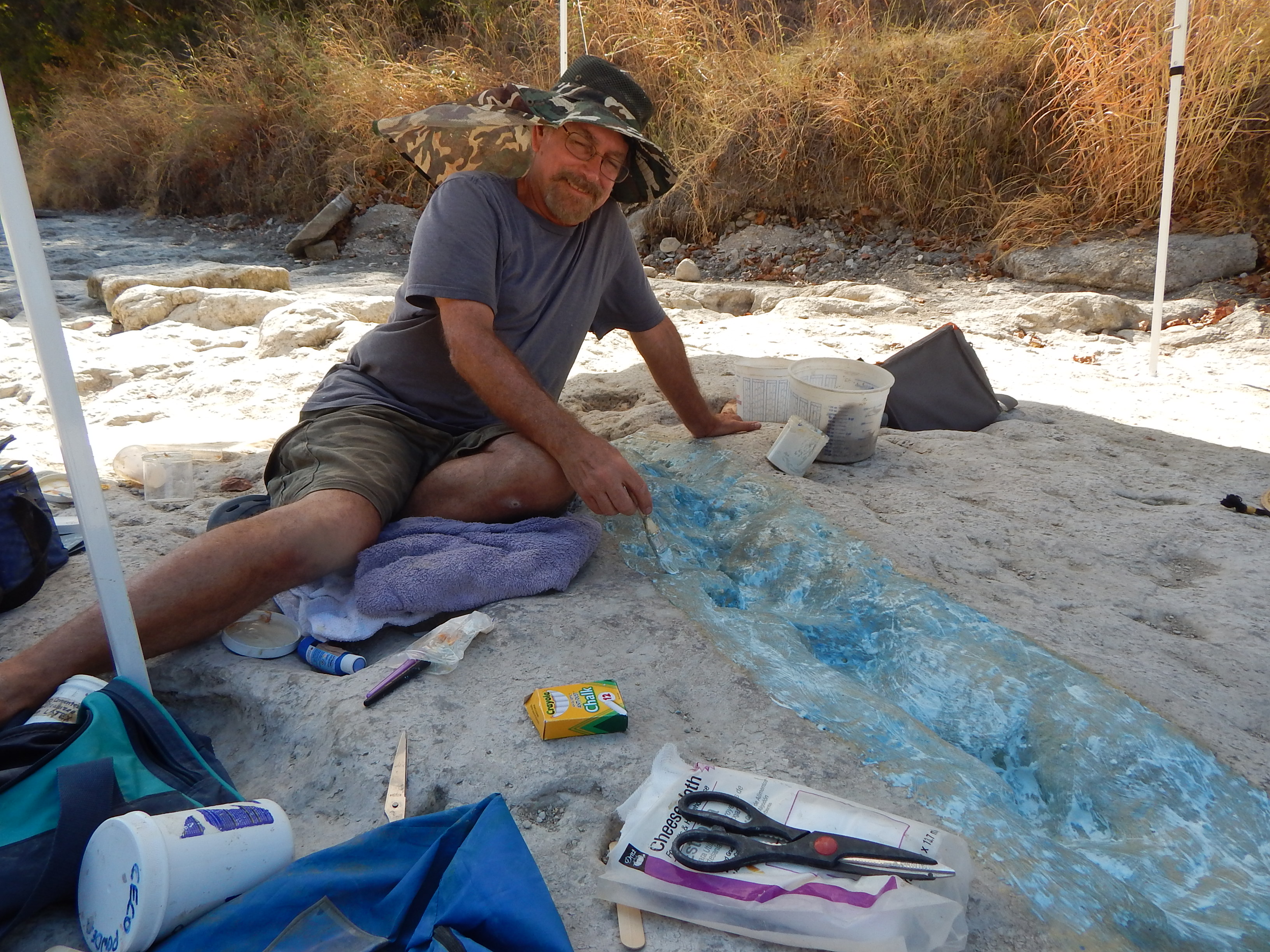
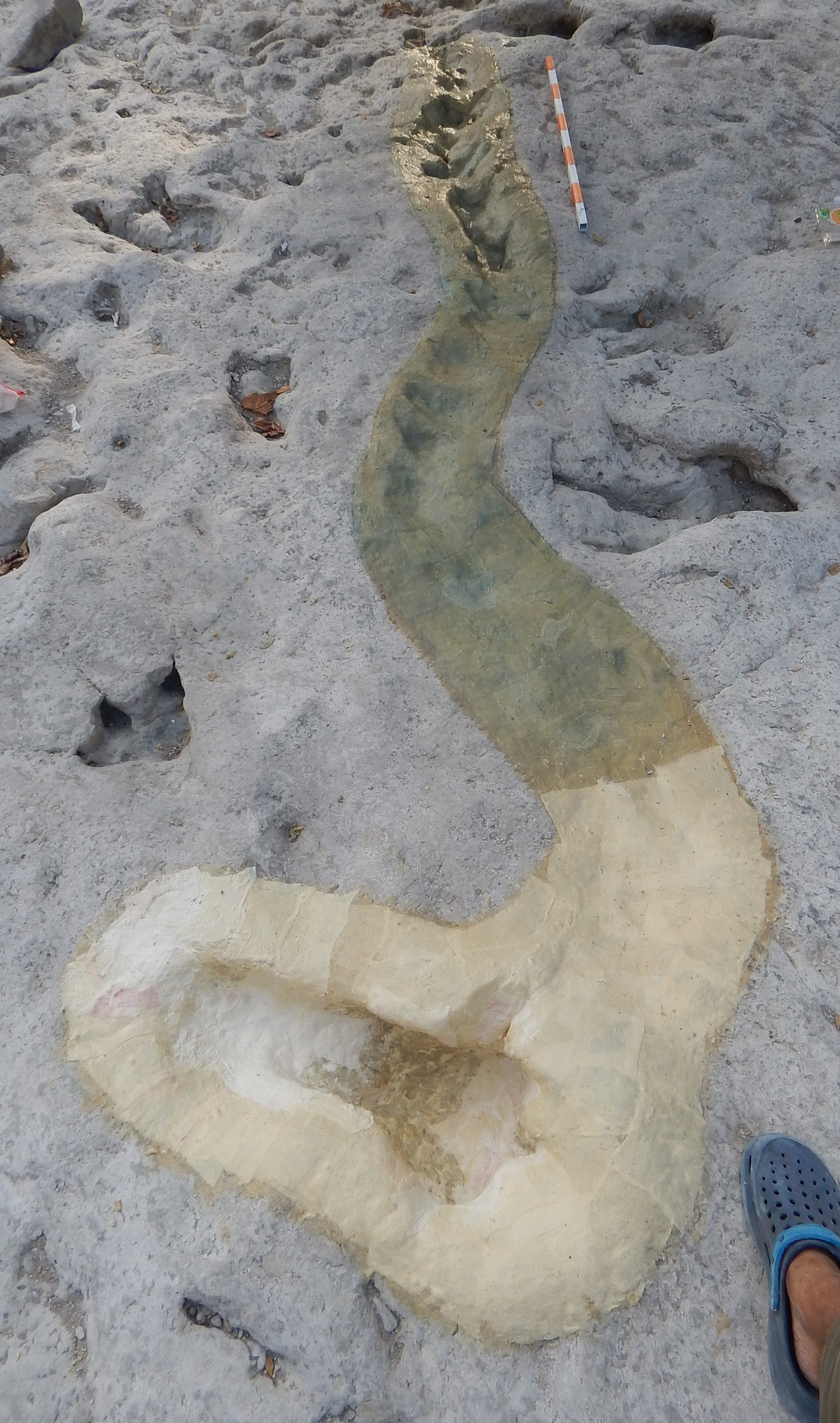
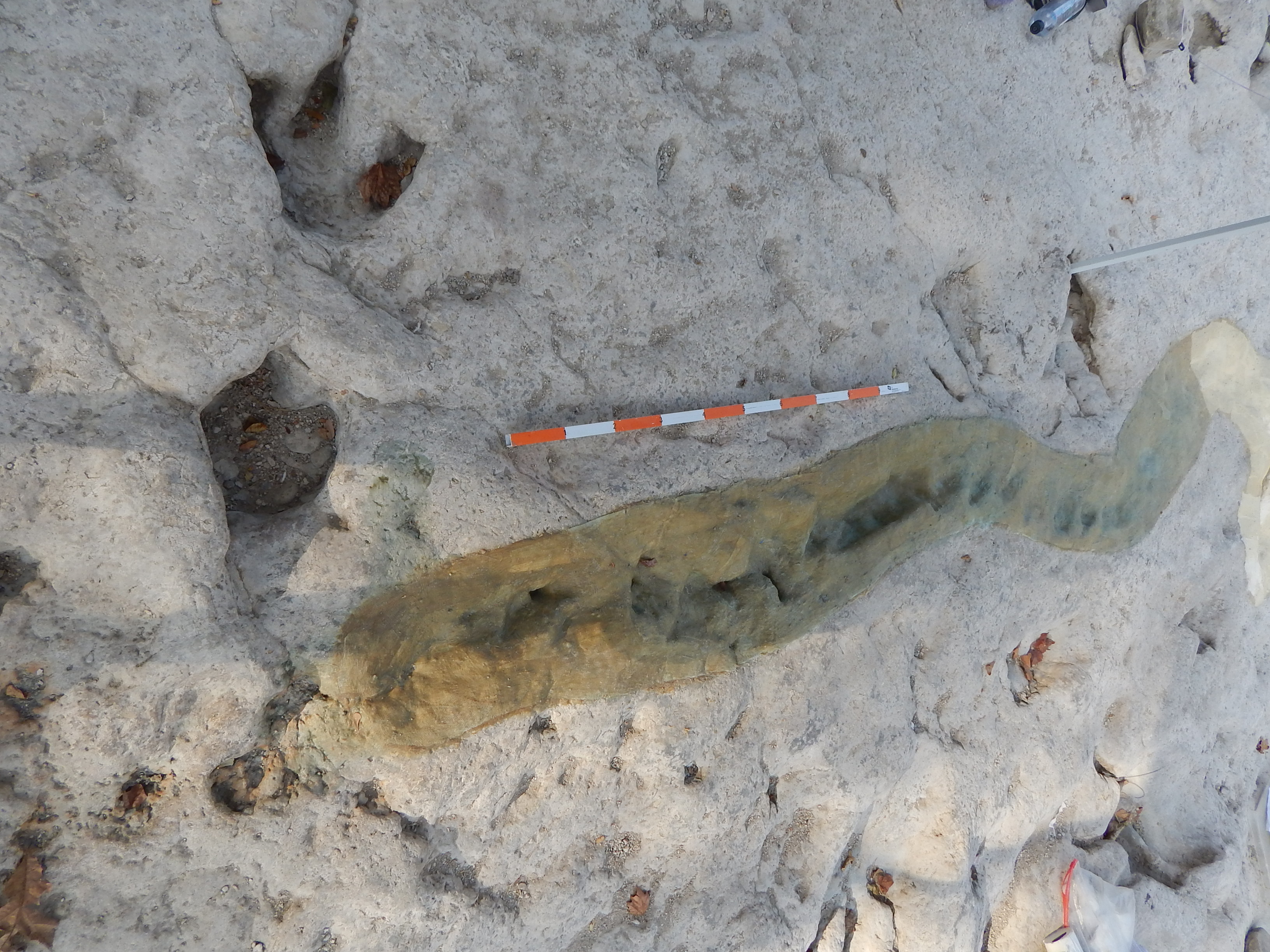
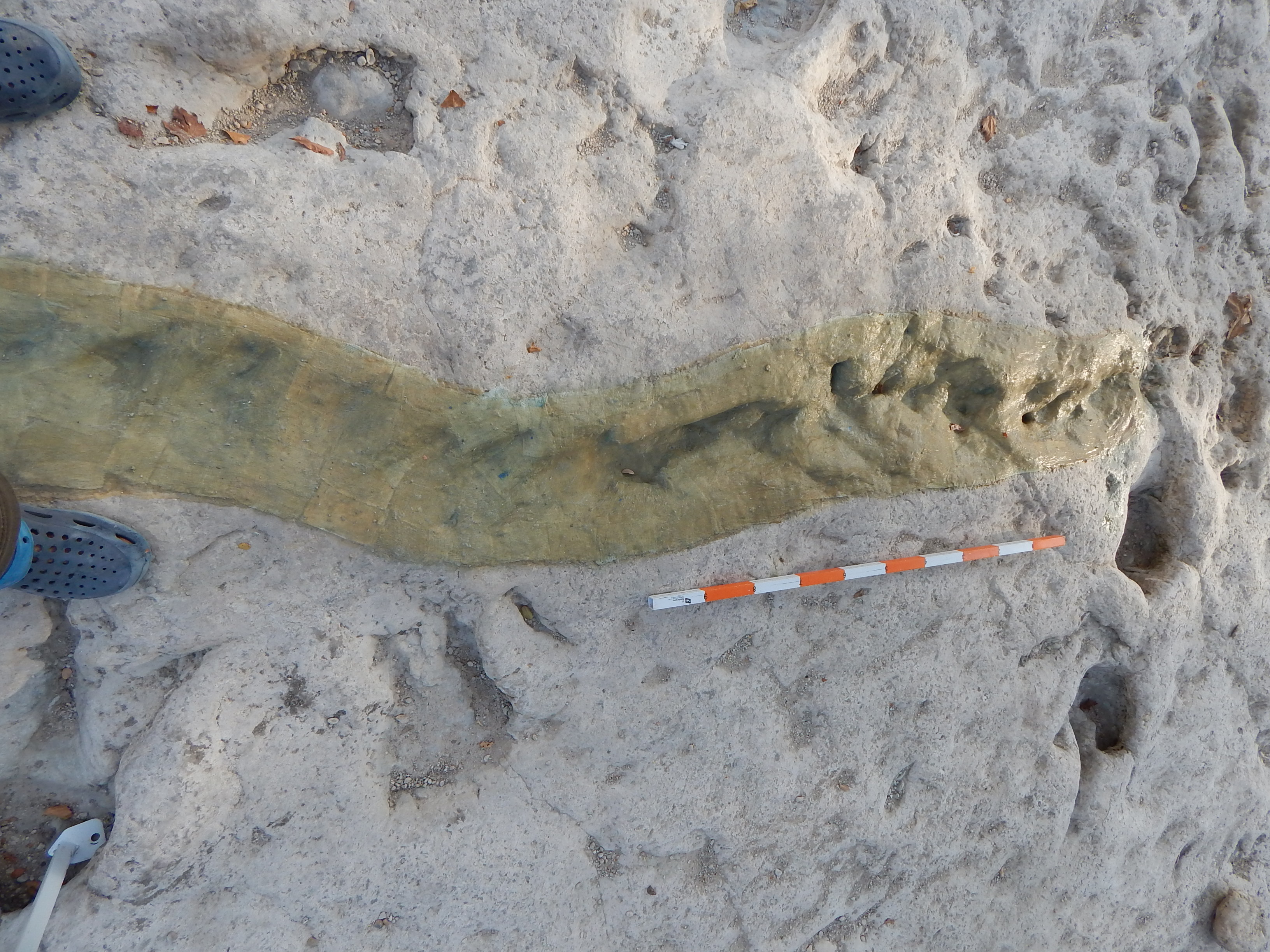
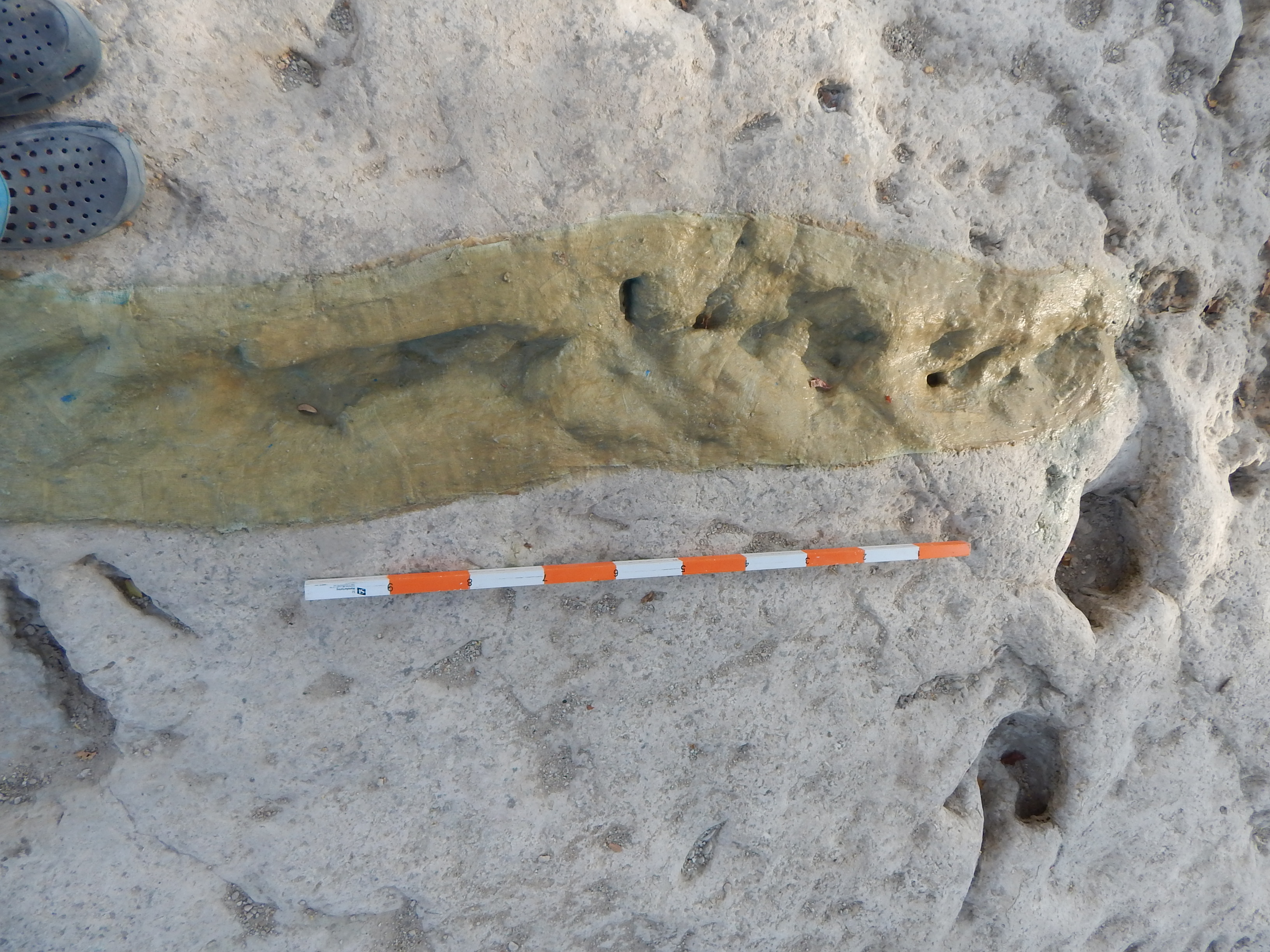
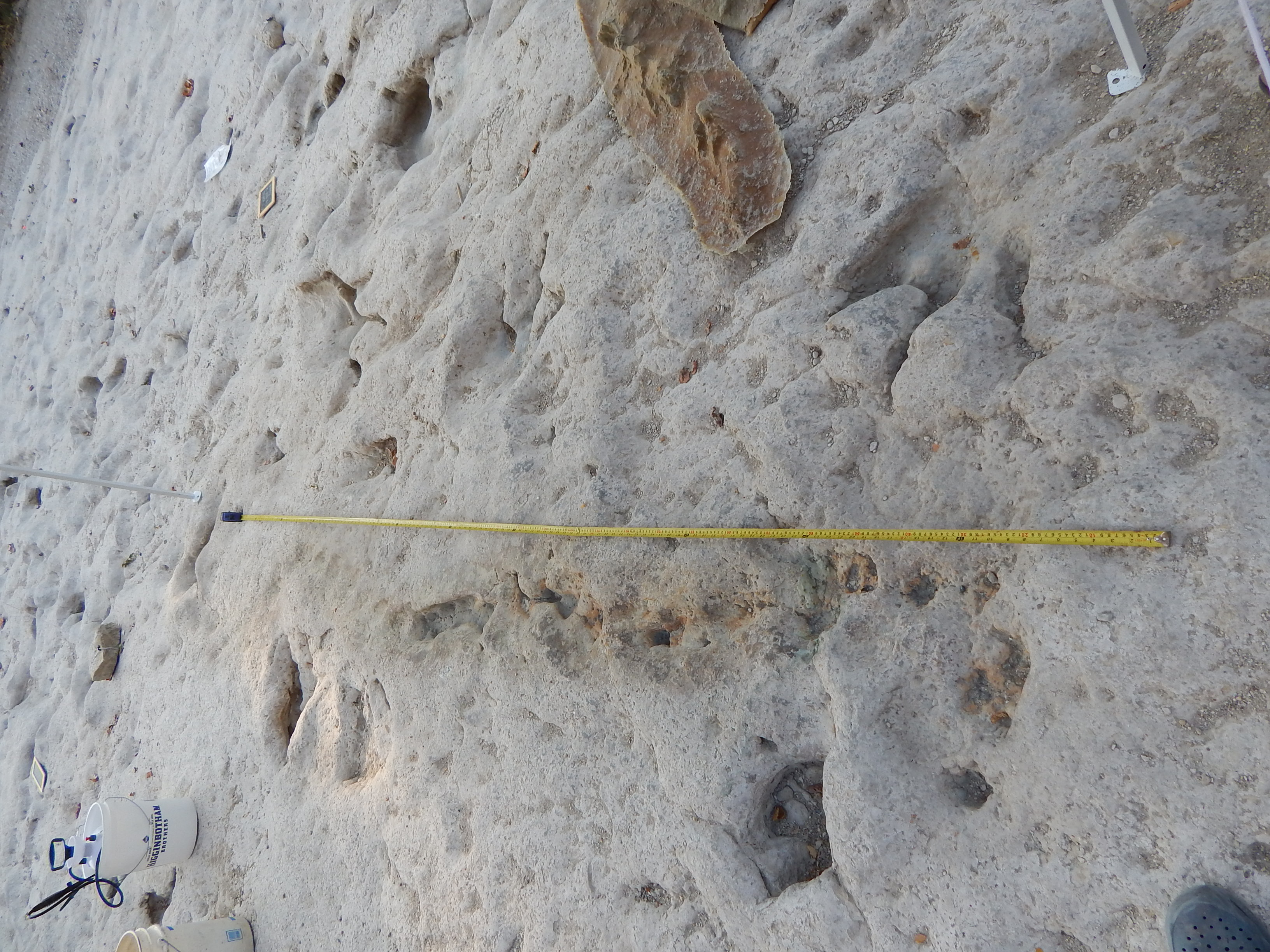
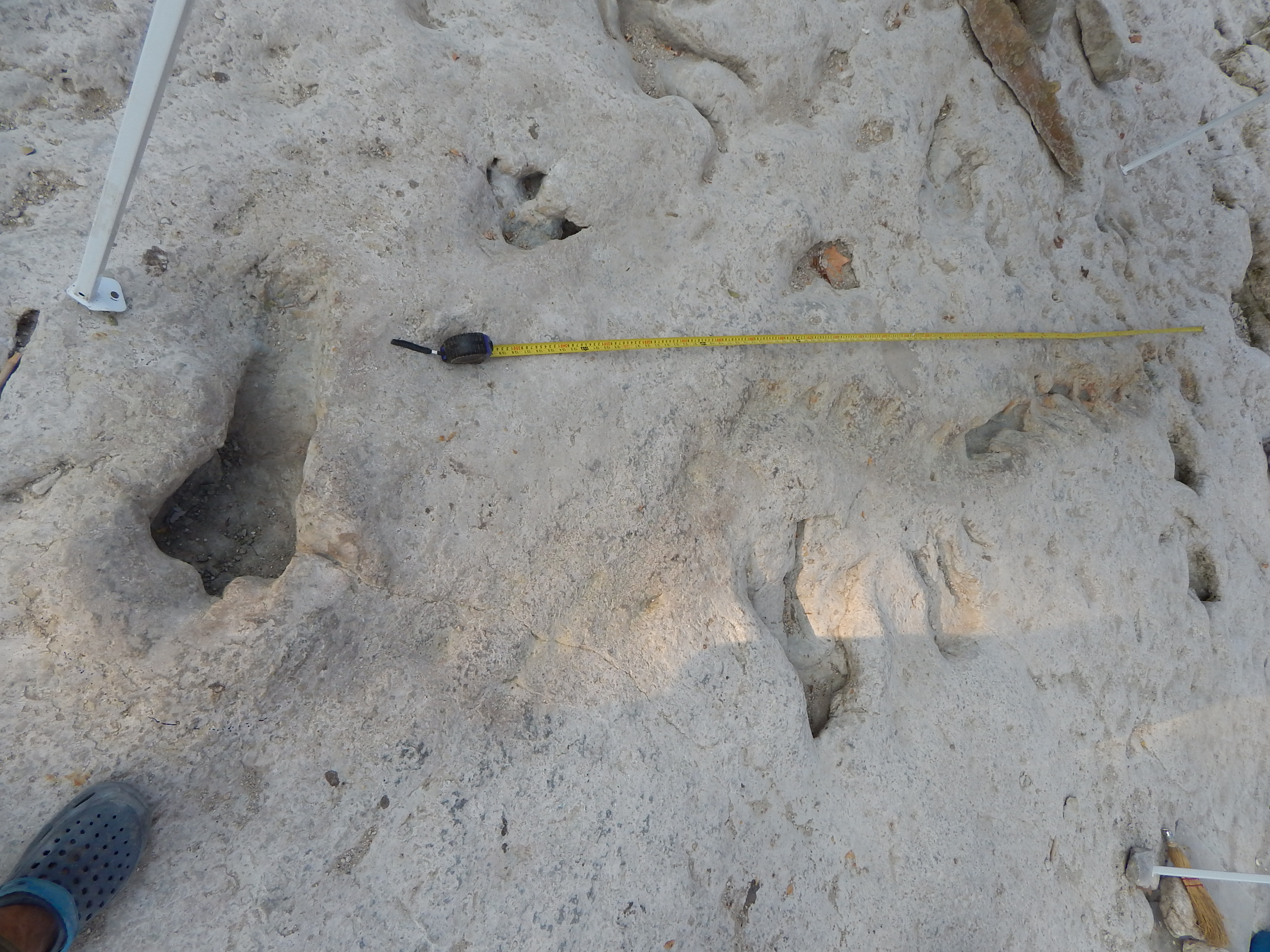
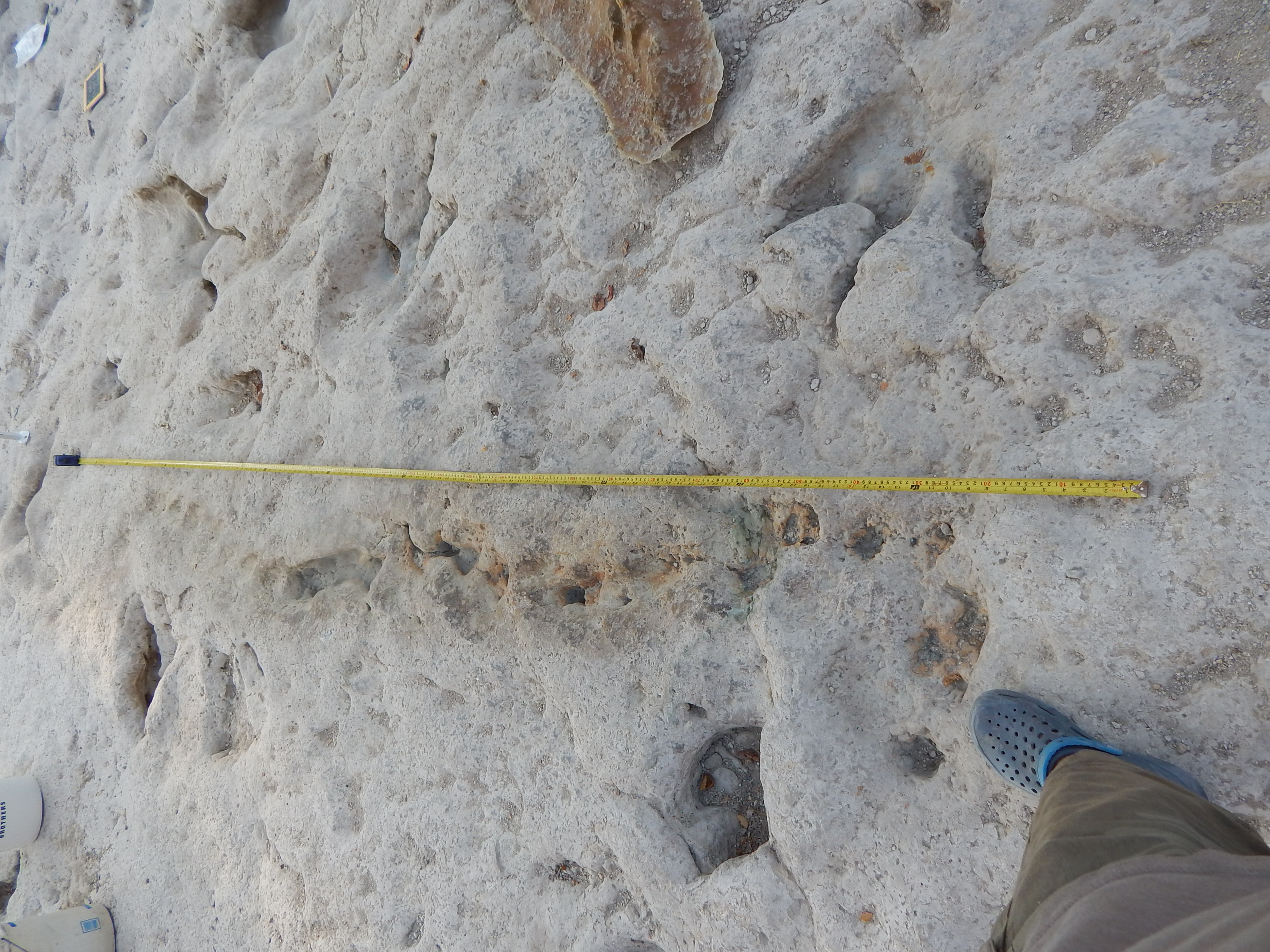
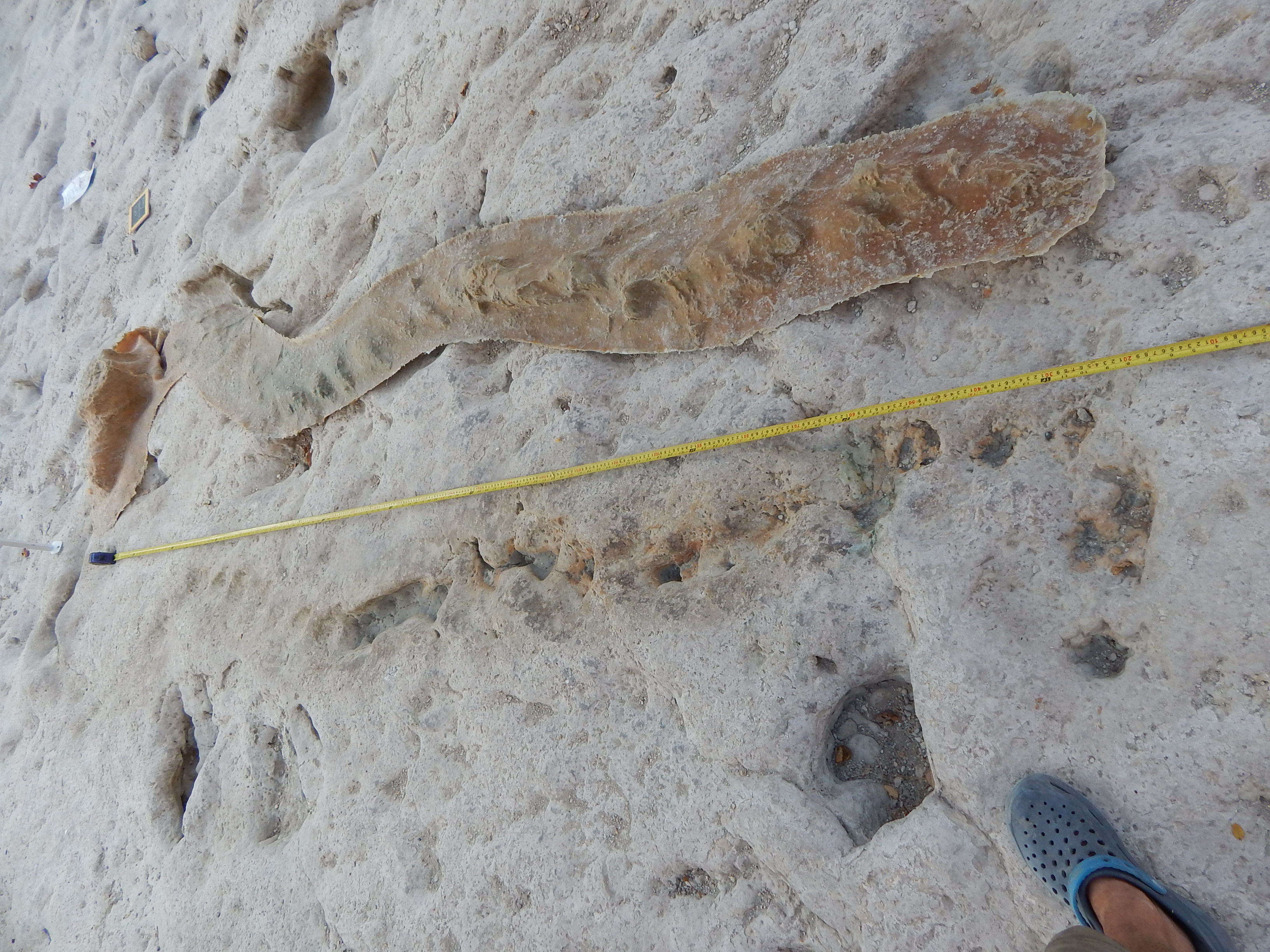
In the northwest area of the site is a long series of irregular depressions, making a trail over fifteen feet long. During the "Big Mapping Project" of 2009 I informally referred to these odd markings "Squiggles" -a nick-name that has stuck. On the west end (presumed to be the begging of the trail) the depressions are a couple inches deep or more in places, with backward angled protrusions aboyt every 10 cm (4 inches), but the depressions become shallower and more cog-like at the east end, before fading out near a deep metatarsal (heel-impressed) theropod track. Other workers seemed to pay little attention to these markings, and most visitors walk right by them without a glance, but I always felt they could be important and possibly indicate a unique track-maker and behavior. I initially speculated that the squiggle creature may be some sort of large invertebrate, but as I studied the markings further in 2023 (at which time a mold was made of the entire trail and theropod tracks that pass it near its end,) I concluded that they were more likely made by a walking fish similar to a mud-skipper or lungfish, whose trails it resembles. Supporting this hypothesis are repeating sharp-ended protrusions mentioned above that appear consistent with fins but not feet of either vertebrates or invertebrates. Most interestingly, a dinosaur walking perpendicular to the squiggle trail in the usual digitigrade (toe-walking) fashion drops to its heels, making a metatarsal print close to where the squiggle trail ends, suggesting that the dinosaur enjoyed a squiggle critter snack. This reinforces the idea that at least some metatarsal tracks may have been made by dinosaurs lowering their postures as they foraged for food items in the mud and shallow water. A few shorter and less distinct similar markings also occur near the larger trail, and on the south side of the site, as well as on the Denio site (where other kinds of squiggles are also found).