Part of Kuban's Paluxy web site
Many "young-earth" creationists (YECs) have claimed that dinosaurs and other prehistoric beasts are depicted on petroglyphs and other ancient art, supposedly proving that the creatures lived in recent times, and overthrowing the conventional geologic timetable. These claims involve several problems.
|
|
|
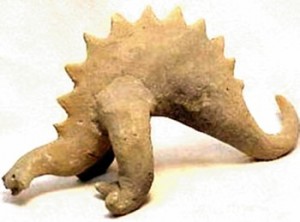
"Acambaro figurine" from Mexico |
|
|
|
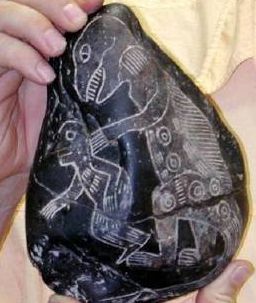
"Ica Stone" from Peru |
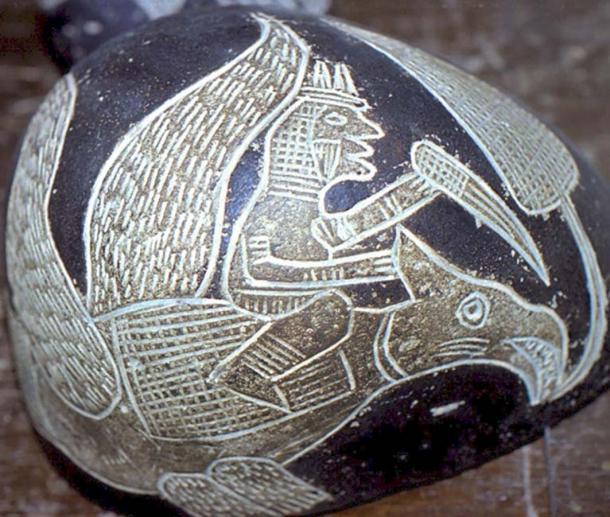
"Man riding "pterosactyl" |
Second, certain animals that are often considered "prehistoric," such as mammoths, mastodons, and saber-cats, are known to have lived alongside humans, in some cases only 10 or 15 thousand years ago. Therefore, the depiction of these particular creatures in ancient art is not even a geologic anomaly.
Third, even if some ancient art depicts real prehistoric creatures, it need not mean the artist saw the living creature. The artwork could have been based instead on fossil remains. Although the point is often ignored or minimized by YECs, it is entirely possible that ancient people sometimes came across fossilized remains of ancient creatures, and drew more or less plausible deductions about their appearance, or combined them with what they knew of contemporaneous animals. This consideration alone largely discounts any anti-evolutionary value for most of the artifacts and petroglyphs in question.
Forth, in some cases the objects appear to be hoaxes or modern renderings. This appears to be the case for alleged human and dinosaur depictions on stones or statures, such as the so-called "Ica Stones" from Peru (some of which supposedly show humans riding pterodactyls), and figurines from Acámbaro, Mexico. Although strongly promoted by a handful of YECs (Baugh, 2010; Patton, 2008; Swift, 2006) both collections are considered hoaxes by virtually all serious researchers (Blanton, 1999; Mathews, 2000; Ross, 2007; Kuban 2008), and are rejected or questioned even by many creationists. Although most of the Native American petroglyphs alleged by creationists are probably ancient but misintepreted (discussed below), as far as I know no YECs have rigorously ruled out the possibility that some of them are recent renderings as well.
| |
|
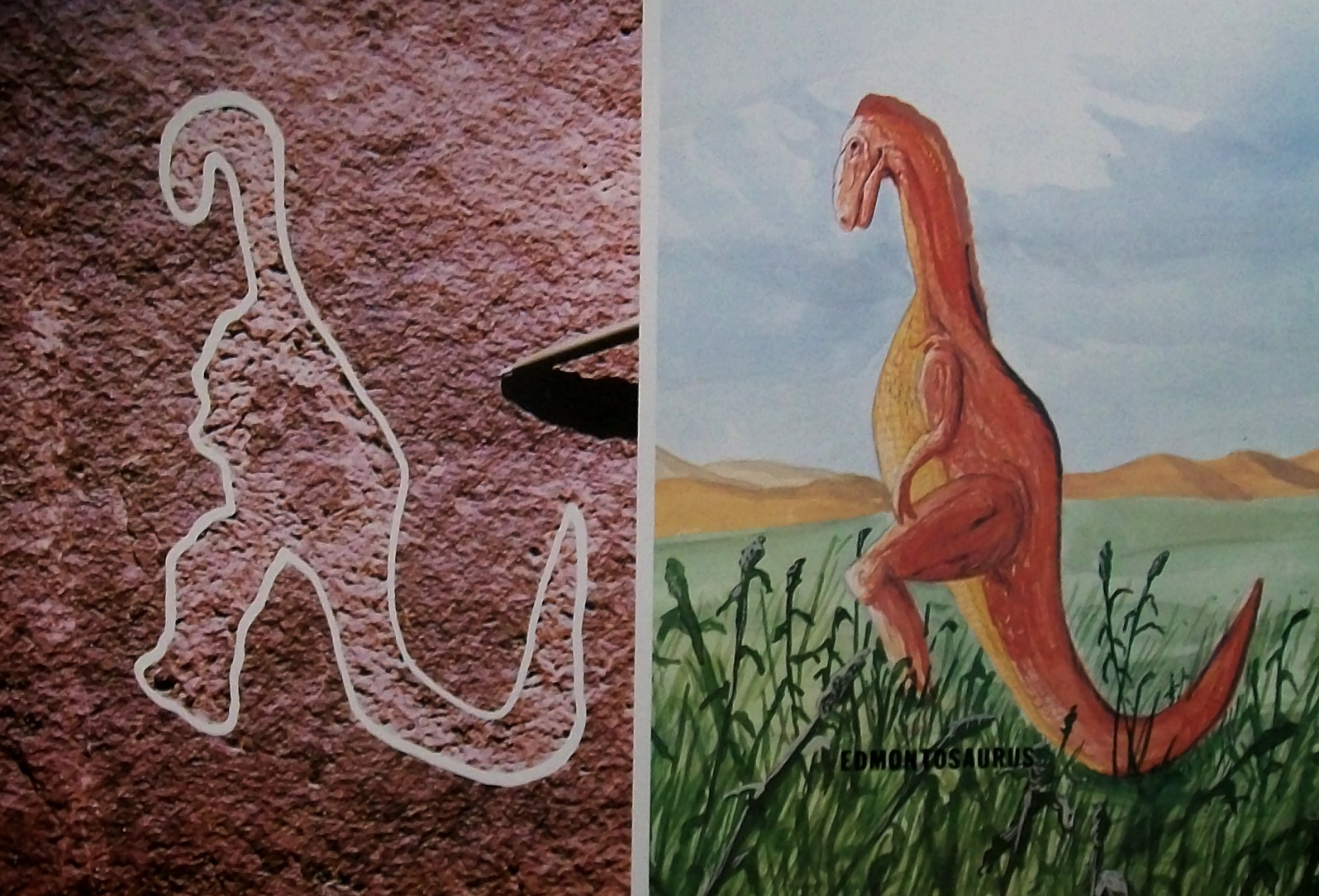
Fig. 1. Supposed "Edmontosaurus" petroglyph Unnecessary outline (left) and contrived reconstruction (right) | |
|
|
|
|
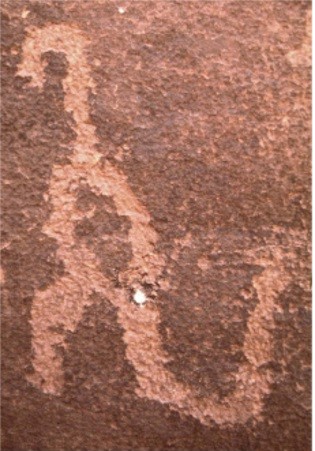
Fig. 2. The acutal petroglyph in Havaisupai Canyon (Grand Canyon) |
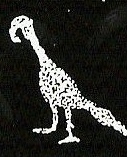
Fig.2b. Eagle petroglyph similar to many others in the western U.S. in Havai Supai Canyon (Grand Canyon) |
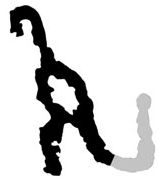
Fig.2c. Havaisupai Canyon petrogplyph with "tail" interpeted as second leg with merged "J" shape |
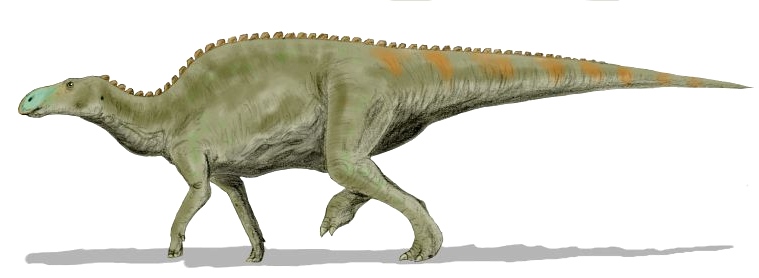
Fifth, and most significantly, many if not all of the alleged depictions of prehistoric beasts are rather stylized and ambiguous, and thus have more than one interpretation--often being at least as compatible with a modern animal (or modern animal combined with native icons and symbols) as any prehistoric creature. In many cases YEC promoters of human-dinosaur cohabitation seem to ignore or dismiss viable alternative candidate animals, or make contrived or manipulated comparisons to foster their view. For example, in his creationism-promoting book The Great Dinosaur Mystery, which is aimed at young readers, Paul Taylor shows a petroglyph from Havasupai Canyon in Arizona. He highlights the petroglyph with a white outline, shown alongside a painting labeled "Edmontosaurus" (a type of two-legged Hadrosaur dinosaur). As depicted by Taylor (Fig. 1), the two profiles look virtually identical. To an unsuspecting reader (especially a child) this might be impressive, and foster the conclusion artist must have seen such a dinosaur.

|
|
|
Fig. 3. Edmontosaurus skeleton. Credit: Palaeontologia Electronica. |
Fig. 3b. Edmontosaurus reconstruction Credit: Wikipedia |
| |
|
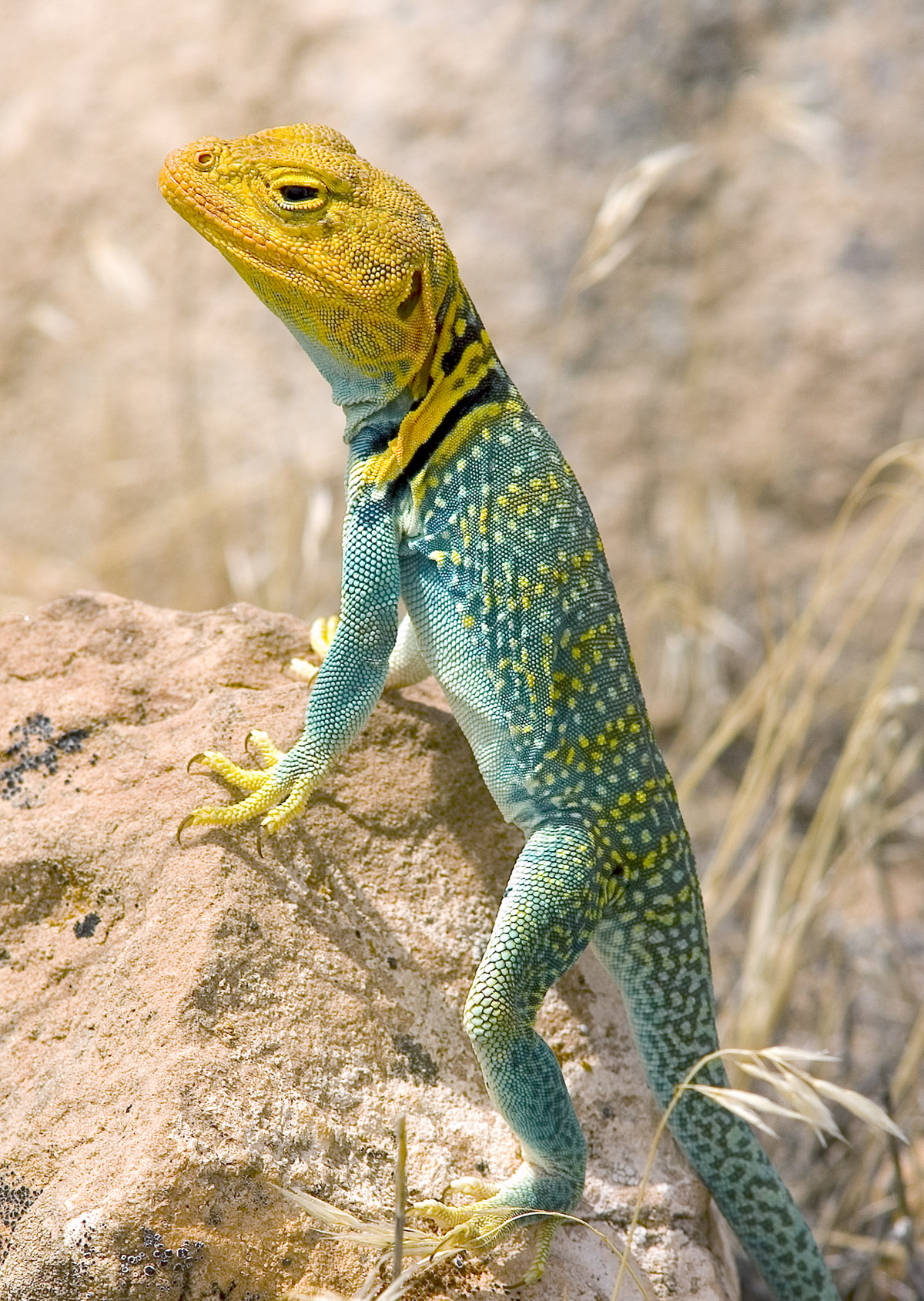
Fig. 4. Collared Lizard Copyright © 2005, Jerry Shue Canyonlands Natural History Association | |
Taylor fails to disclose that numerous Native American petroglyphs of eagles and other birds closely resemble the petroglyph in question (Fig. 2, 2b). This is the most likely interpretation, but the petroglyph could also represent a lizard standing on its hind legs, as lizards sometimes do. Indeed, the petroglyph resembles both known eagle petroglyphs and standing lizard profiles more closely than any realistic reconstruction of an Edmontosaurus. The image shows some ambiguity in regards to one of the legs and tail, but often petroglyphs show a limb or other extremity that is extended, deformed, or combined with another extremity or symbol. Senter (2012) suggests that the supposed "tail" on this so-called "Havasupai dinosaur" could be either the extended second leg of a biped (probably a bird), or merged with a "J" shape (Fig. 2c) --noting that the J shape is a common motif in Native American art, representing fertility. He concludes, "There is no reason to interpret this image as a dinosaur." Detailed analyses of several other alleged dinosaur and pterosaur petroglyphs finds them similarly unconvincing (Senter and Cole, 2011; Senter, 2012).

| |
|
Chinese dragon | |
|
|
|
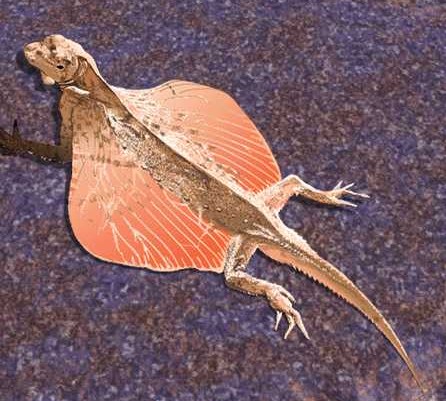
"Flying lizard", Southeast Asia |
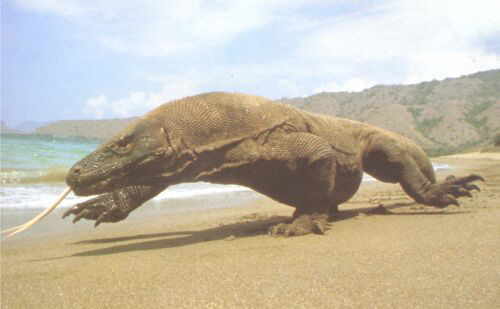
"Komodo Dragon" |
Taylor and other young-earth creationists have also promoted the idea that dragon legends and images that resemble dinosaurs prove that dinosaurs lived in historic times. On a website, Taylor (2010) declares, "The ancient, original "dragon" legends must have come from memories of dinosaurs." However, logic and research point to more likely explanations. First, many dragon depictions, especially Asian ones, appear to largely involve just fanciful renditions and combinations of modern animals--such as snakes, monitors and Dracos ("flying lizards"), fish, and crocodilians. To the extent they contain any uniquely "dinosaurian" features or forms, they could have been based on fossil finds rather live dinosaurs. To this day shops in China sell dinosaur teeth and claws as "dragon bones." Moreover, some of the richest areas for dinosaur fossils occur in China and Mongolia, where dragon legends and images are common. Incredibly, Taylor does not discuss or even mention any of this. Based on his reasoning, ancient people also must have seen griffins, cyclopes, unicorns, sphinxes, and mermaids. More likely, just as with dragons, they were combined products of living animals, fossil remains, and some imagination or artistic license. By the way, griffins are believed to be based on Protoceratops skulls combined with lion and eagle features; the cyclops legend based on elephant or mammoth skulls, and unicorns possibly inspired by narwhale nose horns (at least they were sometimes sold as unicorn horns in medieval times.
| ||||
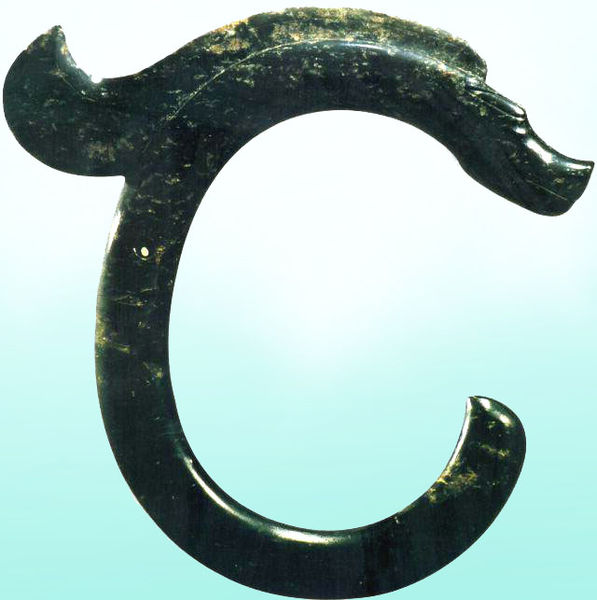
Fig. 7. Authenticated "pig-dragon" |
| 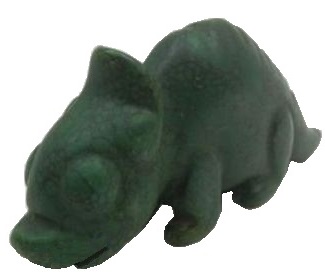
Fig. 8. Alleged "pig-dragon" | | ||
|
|
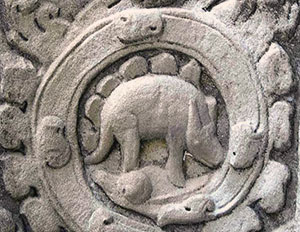
Fig. 5. Alleged stegosaur carving at Ta Prohm Temple. Credit: www.bible.ca |
|
|
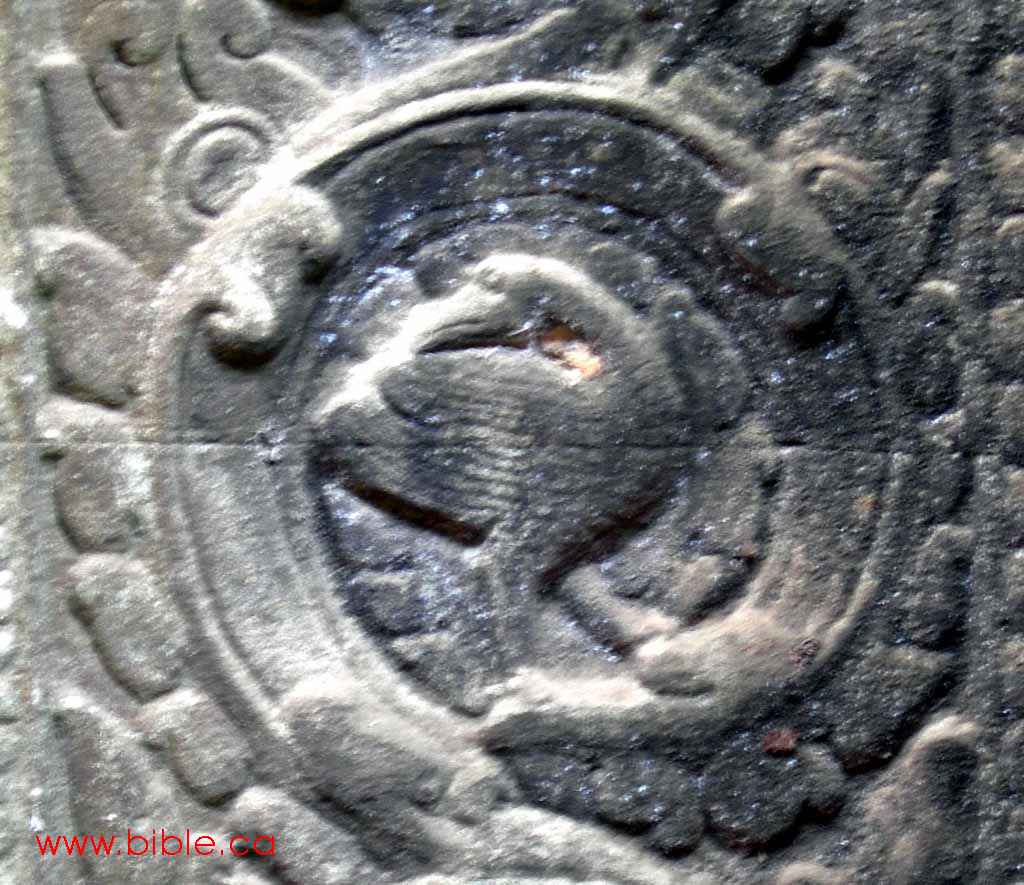
Fig. 6. Bird carving with lobes around its body Credit: www.bible.ca |
Other claims of dinosaurs in ancient art entail similar problems. For example, Patton (2006), Baugh (2006); Swift, 2010) and other YECs have identified a "stegosaur" sculpture in Cambodia (Fig. 5); however, alleged plates on the animal's back resemble the decorative flourishes found on many other animals on the temple (including birds), and the rest of the animal looks more like a rhinoceros or cameleon than a stegosaur (Dunning, 2010; Kuban, 2011).
Other creationists (Thomas, 2013; Woetzel, 2013) have suggested that certain jade figurines known as zhulong or "pig dragons," from the Hongshan culture of China (dated from about 4700 BC to 2900 BC) were based on living ceratopsian dinosaurs. However, virtually all authenticated figurines are more or less elongated forms (the more recent more so), coiled as rings or C-like shapes (often with drilled holes for use as pendants), which have little resemblance to dinosaurs (Fig. 7). In contrast, the more dinosaur-like objects in question (such as Fig. 8) are solid, free-standing figures that have never been authenticated. Lamborn (2013) regards the latter as suspicious at best, and likely forferies, especially since fake Hongshan figurines are commonly sold in antiquities markets. As with other examples, even if the examples in question are genuine and really depict dinosaurs, they could have been based on fossil remails (Kuban, 2011). Unfortunately, many YEC authors appear to operate under the principle that if an ancient image or object resembles some prehistoric creature, that's what it must me--without adequately exploring alternate candidates and explanations. This is not a very scholarly approach, and in the long run probably does more to undermine than advance creationist credibility.
Ironically, YEC claims about dinosaurs in ancient art actually backfire. After all, if humans really did live alongside incredible beasts such as giant dinosaurs just a few thousand years ago, there should be countless clear and unambiguous renderings and descriptions in historical art and literature. Yet all they can point to is a handful of alleged examples, none of which are compelling or exclude alternate explanations. Some YECs claim the Bible mentions dinosaurs, but these cases are also ambiguous at best (Kuban, 2008).
** The Acknowledgements section of the book attributes the drawing to the author, Paul S. Taylor.
Baugh, Carl C. 2006. Web site photo and caption at:
http://184.154.224.5/~creatio1/index.php?option=com_content&task=view&id=25
Baugh casually refers to the statue as a stegosaur, but provides no critical or scientific analysis of it.
Blanton, John. 1999. "The Acambaro dinosaurs". The Newsletter of The North Texas Skeptics, Volume 13, Number 10.
http://www.ntskeptics.org/1999/1999october/october1999.htm.
Also see the Wikipedia article on the Acambaro figurines at:
http://en.wikipedia.org/wiki/Ac%C3%A1mbaro_figures/
Dunning, Brian. 2010. "Dinosaurs Among Us" Skeptoid #207, Web article at: http://skeptoid.com/episodes/4207
Kuban, Glen. 2008. "Does the Bible Describe Dinosaurs in Job 40 and 41?". Web article at: http://paleo.cc/paluxy/behemoth.htm
Kuban, Glen. 2010a. "Living Pterosaurs?" Web article at: http://paleo.cc/paluxy/livptero.htm
Kuban, Glen. 2011. "Stegosaurus Carving on a Cambodian Temple?". Web article at: http://www.paleo.cc/paluxy/stegosaur-claim.htm
Kuban, Glen. 2010c. "Fossil Tracks and Other Trace Fossils Falsify Flood Geology". Web article at: http://paleo.cc/ce/tracefos.htm
Lamborn, P. 2013. "The Hongshan Pig Dragons". From "Eye on the ICR" blog at: http://eyeonicr.wordpress.com/2013/12/09/the-hongshan-pig-dragons/
Mathews, David, 2000. "Domesticated Dinosairs?". Web article at: http://www.geocities.com/athens/agora/3958/weekly/weekly56.htm
Patton, Don. 2006. "Dinosaurs in ancient Cambodian temple: Amazing evidence that dinosaurs and humans coexisted." Web article at: http://www.bible.ca/tracks/tracks-cambodia.htm
Patton, 2008. "Art From Ancient Tombs In Peru (Probably Nasca culture)" Web article at: http://www.bible.ca/tracks/peru-tomb-art.htm
Ross, Sara. 2007. "The Ica Stones and Dr. Javier Cabrera" Web article at: http://pseudoarchaeology.org/b03-ross.html
Senter, Phil, and Cole, S.J. 2011. "Dinosaur" petroglyphs at Kachina Bridge site, Natural Bridges National Monument, southeastern Utah: not dinosaurs after all. Palaeontologia Electronica, 14(1):2A-5p. Web version at: http://palaeo-electronica.org/2011_1/236/236.pdf
Senter, Phil. 2012. More Dinosaur and pterosaur rock art that isn’t. Palaeontologia Electronica web article at: http://palaeo-electronica.org/content/2012-issue-2-articles/275-rock-art-dinosaurs
Snelling, Andrew, 1991 (Dec). Where are all the human fossils? Creation 14(1):28-33. Web version at:
www.answersingenesis.org/articles/cm/v14/n1/human-fossils
Another version of the article appears at:
www.christiananswers.net/q-aig/aig-c014.html
Swift, Dennis. 2006. "Secrets of the Ica Stones and Nazca Lines" (no publisher info).
Swift, Dennis. 2010. "Ancient Dinosaur Depictions." Website article at: http://www.genesispark.com/genpark/ancient/ancient.htm
Taylor, Paul S. 1987. The Great Dinosaur Mystery and the Bible. Master Books. San Diego, CA. Paul and his father Stan once actively promoted the Paluxy "man track" claims through this book, other literature, and the film "Footprints in Stone." After the track claims were well refuted by myself and others, Paul removed references to the "human tracks" and stopped distributing the film. However, he and other YECs continue to promote the the notion of human and dinosaur cohabitation based on their narrow reading of Genesis and the dubious evidence discussed in the current article. For more info see: http://paleo.cc/paluxy.htm
Taylor, Paul, 2010. "Dragons and dinosaurs" Web article at: http://www.christiananswers.net/dinosaurs/j-dragon1.html
Woetzel, David. 2013. Genesis Park website. "Ancient Dinosaur Depictions." Web article at: http://www.genesispark.com/exhibits/evidence/historical/ancient/dinosaur/
Ica Stones: Yabba-Dabba-Do! by Massimo Polidoro
Domesticated Dinosaurs? David Mathews' review of the Ica Stones and other YE claims
Utah's False Testimony To Catastrophe by Sherry Konkus
Revised:
Dec. 2013, Sept. 2012, Dec. 2010
Unique page visits since Dec. 7, 2010: